
Table of Contents
- Why Plastic-Free Cold Brew Matters for Your Health
- How to Make Cold Brew Without Plastic
- Stainless Steel Cold Brew Filters: Durability and Sediment Control
- Low Acidity Coffee Beans for Sensitive Stomachs
- Borosilicate Glass vs. Stainless Steel: Which Material Wins
- Maintenance and Longevity of Plastic-Free Brewers
- The Environmental Impact of Your Brewing Choice
Last Updated: August 30, 2026
Why Plastic-Free Cold Brew Matters for Your Health
Plastic containers leach chemicals into beverages, especially cold liquids that sit for extended periods (Food Standards Australia New Zealand on chemical migration). The longer your cold brew steeps, the greater the potential for unwanted compounds to migrate into your cup. This is where plastic free cold brew makers become essential for health-conscious drinkers.
Most conventional cold brew systems rely on plastic pitchers, plastic filters, or plastic components that degrade over time. Even BPA-free plastics can release microplastics and other compounds when exposed to acidic or high-contact environments (peer-reviewed research). For people with sensitive stomachs or those prioritising low-tox living, this matters profoundly.
A plastic free cold brew coffee maker eliminates this concern entirely. Borosilicate glass and stainless steel construction mean your coffee stays pure from brew to cup. The material stability of these alternatives ensures your 12-24 hour steeping process doesn't introduce unwanted leaching.
Beyond chemistry, there's a ritual element. Brewing with intention, using quality materials and taking time to prepare something nourishing, transforms your morning routine from rushed caffeine grab to grounded self-care. At Brew & Glow, we've built our entire approach around this philosophy: that how you brew matters as much as what you brew.

How to Make Cold Brew Without Plastic
Making cold brew without plastic at home is straightforward once you have the right vessel. The process itself hasn't changed, it's the container that transforms the experience.
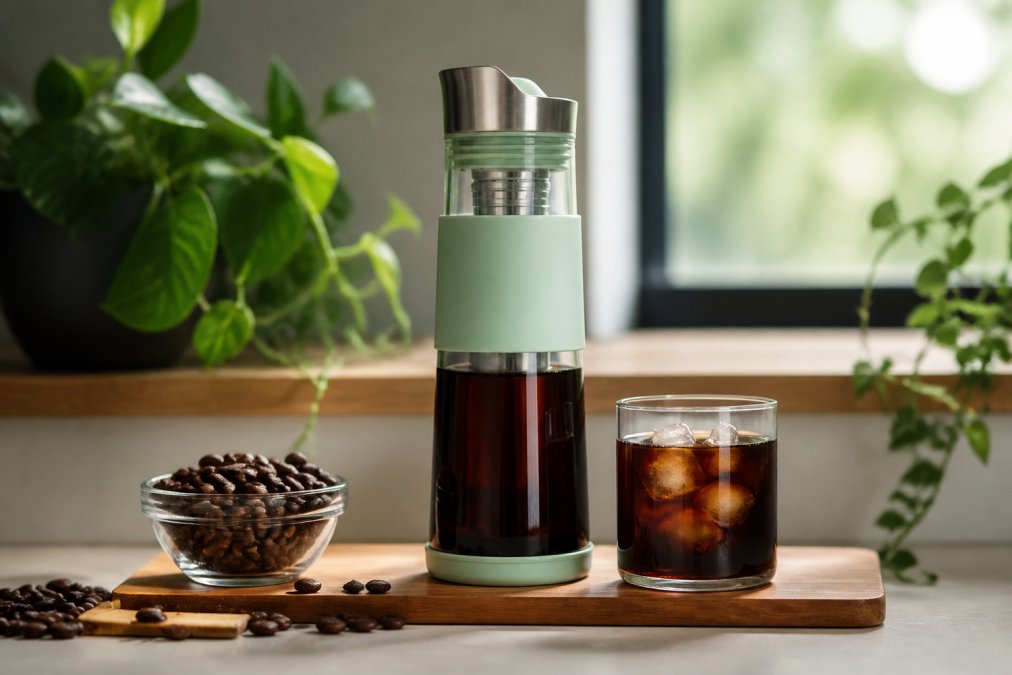
Start with a glass or stainless steel brewing vessel. A borosilicate glass carafe with stainless steel filtration components is ideal because it's durable, transparent (so you can monitor steeping progress), and completely inert. Add coarsely ground coffee at a ratio of roughly 1 part coffee to 4 parts water, though you can adjust based on strength preference.
Pour cold filtered water over the grounds, ensuring they're fully submerged. Stir gently to saturate all particles. Cover the vessel and place it in your refrigerator. The immersion brewing process requires patience, typically 12-24 hours depending on grind size and desired strength. Finer grinds extract faster; coarser grinds take longer but produce cleaner, less bitter results.
After steeping, pour slowly through your stainless steel filter or mesh filtration system. A quality plastic free cold brew maker features double filtration, which removes sediment without requiring paper filters. The concentrate that emerges is smooth, full-bodied, and ready to dilute with water or milk.
This method produces a coffee concentrate you can store for up to two weeks. Each morning, mix one part concentrate with one part water or milk for a ready-made cold brew. The beauty of brewing without plastic is that your vessel becomes a permanent kitchen fixture, no disposable components, no replacements needed.
Stainless Steel Cold Brew Filters: Durability and Sediment Control
A stainless steel cold brew filter is the workhorse of sediment-free brewing. Unlike paper filters that require replacement and create waste, stainless steel mesh is permanent, washable, and performs consistently across hundreds of brews.
The mesh size matters. Too coarse and fine particles slip through, leaving sediment. Too fine and water flows sluggishly, extending brew time. Professional-grade stainless steel filters use a micron rating of 100-200, which captures sediment while maintaining reasonable flow rate. Double filtration systems, two layers of mesh at different micron ratings, offer the cleanest results.
Stainless steel doesn't absorb oils or flavours like paper does. This means you taste the full coffee profile without muted complexity. After each brew, simply rinse the filter under running water. No degradation, no replacement cycles. A quality stainless steel cold brew filter will outlast dozens of coffee makers.
The durability advantage extends to the entire system. Borosilicate glass resists thermal shock and won't crack from temperature changes. Stainless steel components resist corrosion and maintain structural integrity indefinitely. Together, they create a brewing vessel that improves with age rather than deteriorating.
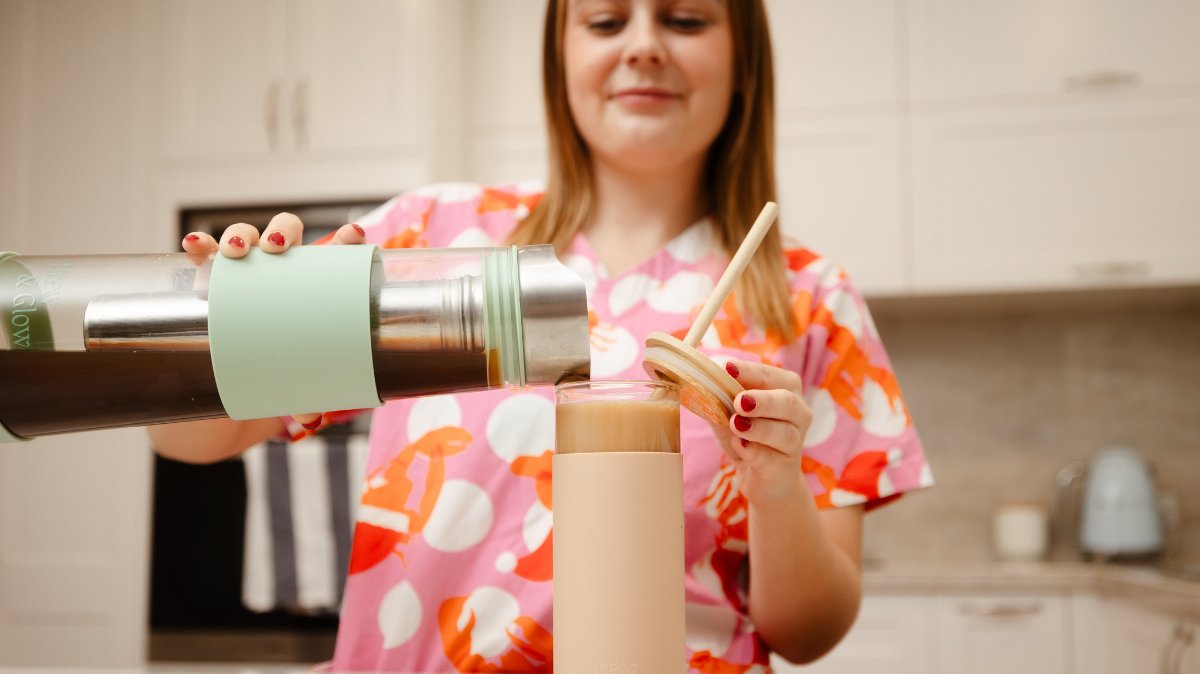
Brew & Glow's Brew and Go Cold Brew Coffee Maker features double stainless steel filtration specifically designed for sediment-free pouring. The smart pour lid prevents drips and makes serving effortless, a design detail that transforms the ritual from functional to genuinely pleasurable.
Low Acidity Coffee Beans for Sensitive Stomachs
Cold brew naturally produces lower acidity than hot coffee (peer-reviewed research). The immersion process at cool temperatures extracts fewer acidic compounds, resulting in a smoother, gentler cup. For people with acid reflux or sensitive digestion, this is significant.
But bean selection amplifies this benefit. Some coffee origins and roast profiles naturally contain less chlorogenic acid and quinic acid, the primary culprits in coffee-induced stomach irritation. Medium to dark roasts tend toward lower acidity than light roasts. Single-origin coffees from certain regions, particularly those grown at lower elevations, produce naturally softer profiles.
Low acidity coffee beans paired with cold brewing create a compounding effect. You're not just choosing a brewing method; you're choosing beans bred and roasted for gentleness. This matters for people who love coffee but struggle with its digestive impact.
At Brew & Glow, our coffee beans are responsibly sourced and roasted to 70% less acidity for a smoother taste. We've paired this with our Swiss water decaffeination process for those seeking caffeine-free options without sacrificing flavour. The result is a coffee experience that's genuinely gentle on sensitive stomachs while maintaining the full-bodied, cafe-quality taste most people expect.
Borosilicate Glass vs. Stainless Steel: Which Material Wins
Both materials excel, but they serve different priorities. Understanding their strengths helps you choose based on your actual needs.
Borosilicate glass offers transparency, you watch the coffee darken as it steeps, which is satisfying and practical. It's completely inert, meaning zero risk of leaching regardless of brewing time. Glass is also temperature-stable, moving seamlessly from refrigerator to counter without stress. The visual appeal is undeniable; a beautiful glass cold brew maker becomes kitchen décor.
The trade-off is fragility. Glass breaks if dropped. It's heavier than stainless steel, which matters if you're moving it frequently. Some people find the weight reassuring; others find it inconvenient.
Stainless steel is nearly indestructible. It won't break, won't stain, won't show water spots. It's lighter and more portable. For busy professionals who value durability and simplicity, stainless steel is the practical choice. The downside is opacity, you can't see the brewing progress without opening the vessel.
For most home brewers, borosilicate glass is the better choice. The transparency makes the ritual more engaging, and the durability is sufficient for careful home use. For travel, outdoor use, or high-contact environments, stainless steel wins.
Brew & Glow's Brew and Go combines both: a borosilicate glass carafe with a stainless steel shock-proof base and double stainless steel filtration. This hybrid approach captures the best of each material, visual appeal and complete transparency paired with durability and sediment-free filtration.
Material |
Transparency |
Durability |
Temperature Stability |
Weight |
Best For |
|---|---|---|---|---|---|
Borosilicate Glass |
Full visibility |
Good (breakable) |
Excellent |
Heavier |
Home brewers who value ritual and aesthetics |
Stainless Steel |
Opaque |
Excellent |
Good |
Lighter |
Travellers and high-use environments |
Hybrid (Glass + Steel Base) |
Full visibility |
Excellent |
Excellent |
Moderate |
Most home users seeking balance |
Maintenance and Longevity of Plastic-Free Brewers
A plastic free cold brew coffee maker requires minimal maintenance, which is one of its greatest advantages. Without plastic components degrading, without filters requiring replacement, the system simply works year after year.
After each brew, rinse the stainless steel filter under running water. Use a soft brush to gently remove any grounds lodged in the mesh. For the glass carafe, warm soapy water is sufficient, borosilicate glass doesn't absorb oils or stains. Dry thoroughly to prevent water spots, though these are purely cosmetic and don't affect function.
Monthly, run the filter under hot water to remove any accumulated mineral deposits. If your water is particularly hard, soak the stainless steel components in a solution of equal parts white vinegar and water for 15 minutes, then rinse thoroughly. This maintains the mesh's flow rate and appearance.
The silicone seals and gaskets that keep your brewer leak-proof are the only components that may eventually need attention. Quality silicone lasts years, but if you notice leaking, replacement gaskets are inexpensive and easy to install. This is preventative maintenance, not a failure, most brewers never need it.
Longevity is the real story. A well-maintained plastic-free cold brew maker lasts indefinitely. Glass doesn't degrade. Stainless steel doesn't corrode. Unlike plastic brewers that become brittle and discoloured within 2-3 years, a quality glass and steel system improves with age. The more you use it, the more it becomes part of your routine. This transforms the initial investment into a permanent kitchen tool rather than a consumable product.
The Environmental Impact of Your Brewing Choice
Every plastic cold brew maker eventually ends up in landfill. Even "durable" plastic degrades over 5-10 years, leaching microplastics into soil and water. Replacing plastic brewers perpetually creates waste streams that persist for decades.
A plastic free cold brew maker eliminates this cycle entirely. Glass and stainless steel are infinitely recyclable. If your brewer ever reaches end-of-life, both materials can be melted down and reformed into new products without degradation. This is fundamentally different from plastic, which downgycles into lower-quality products before eventual disposal.
But the environmental story goes deeper than end-of-life recycling. Manufacturing plastic requires petroleum extraction and energy-intensive processing. Stainless steel and glass require less energy per use over their lifetime because they last so much longer. When you amortise environmental impact across 20 years of use, a durable plastic-free brewer has a dramatically lower footprint than replacing plastic brewers every few years.
There's also the water consideration. Cold brew requires extended steeping, which means water sits in contact with your brewing vessel for 12-24 hours. If that vessel is leaching microplastics or chemical compounds, you're not just drinking coffee, you're drinking contamination. Choosing glass or stainless steel protects both your health and the waterways where that coffee eventually flows.
At Brew & Glow, we've designed our entire product line around this principle. Our Brew and Go maker uses borosilicate glass and stainless steel. Our coffee beans are sourced from farms practising regenerative agriculture. Our packaging is recyclable and minimal. The ritual of plastic free cold brew becomes an expression of values, not just what you drink, but how you choose to live.
Switching to a plastic-free cold brew system means investing in a brewing vessel that will serve you for decades. Brew & Glow's Brew and Go Cold Brew Coffee Maker combines borosilicate glass durability with double stainless steel filtration, delivering sediment-free cold brew with zero plastic contact. Pair it with our responsibly sourced, 70% lower-acidity coffee beans, and you've created a complete ritual that's gentle on your stomach and kind to the planet. Shop the ritual and transform your morning into a moment of genuine self-care.

Frequently Asked Questions
Is there a truly plastic-free cold brew maker available?
Yes. Cold brew makers made from borosilicate glass with stainless steel filtration and silicone seals eliminate plastic contact entirely. The Brew and Go Cold Brew Coffee Maker ($69.00) uses tough borosilicate glass and double stainless steel filtration with a shock-proof silicone base—no plastic in contact with your coffee. This design prevents microplastics from leaching into your brew while maintaining thermal stability throughout the steeping process.
How much does switching to a plastic-free cold brew maker reduce chemical leaching?
Plastic containers can leach BPA and other compounds during brewing, especially over extended steeping periods. Glass and stainless steel brewers eliminate this risk entirely—neither material breaks down or releases chemicals into your coffee. The difference is significant for daily drinkers: borosilicate glass remains inert even after months of use, while plastic degrades gradually, particularly when exposed to acidic or hot liquids.
Can low acidity coffee beans really help with acid reflux or sensitive stomachs?
Low-acidity beans undergo different processing and roasting that reduces chlorogenic acid levels—the primary compound that triggers acid reflux. Many people with sensitive stomachs report fewer digestive issues when switching to low-acidity varieties. Brew & Glow's responsibly sourced beans are specifically selected for smoothness and gentleness, and customers like Alex report: 'The low acidity really makes a difference.' Combining low-acidity beans with cold brew immersion (which naturally extracts fewer acids than hot brewing) creates a noticeably smoother, gentler cup.
How long does cold brew stay fresh in a plastic-free glass maker?
Properly brewed cold brew in a sealed glass container stays fresh and smooth for up to 14 days in the refrigerator. Borosilicate glass protects the coffee from oxidation and light exposure better than plastic, maintaining the full-bodied flavour and preventing bitterness. The Brew and Go's sealed design and stainless steel filtration ensure your 1-litre batch remains sediment-free and flavourful throughout, with no degradation from container material.
This article was written using GrandRanker


