
Table of Contents
- Glass vs Plastic Cold Brew: The Core Differences
- Durability and Shatter Resistance: Which Material Wins
- Chemical Purity and BPA-Free Cold Brew Makers
- Flavor Retention and Coffee Oil Buildup
- How to Clean Cold Brew Coffee Makers: Glass vs Plastic
- Cold Brew Coffee Brewing Time and Extraction
- Cost, Environmental Impact, and Long-Term Value
- Conclusion
Last Updated: August 27, 2026
Glass vs Plastic Cold Brew: The Core Differences
Choosing between glass and plastic cold brew makers shapes your brewing experience, affecting taste, equipment longevity, potential chemical leaching, and your enjoyment of the ritual. Glass prioritises purity and longevity; plastic emphasises durability and convenience. Neither is universally "better", the right choice depends on what matters most to you.

The core distinction lies in material properties. Borosilicate glass resists thermal shock and chemical interaction with acidic coffee compounds. Food-grade plastic offers shatter resistance and lighter weight, but introduces questions about leaching and stain retention over time.
Durability and Shatter Resistance: Which Material Wins
Glass cold brew makers win on longevity. Borosilicate glass, used in laboratory equipment, withstands temperature fluctuations without cracking. A quality glass brewer can offer long-term use.
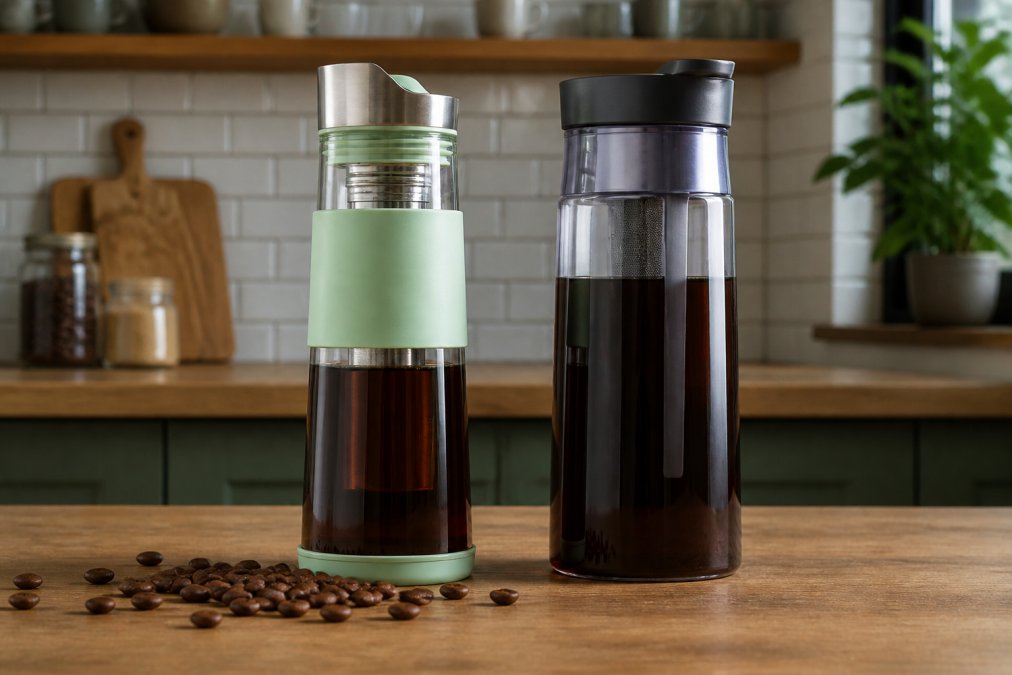
Borosilicate glass & no plastic components is a clear winner.
The catch: glass breaks if dropped. Plastic survives impacts that would shatter glass, making it forgiving in busy kitchens or households with children.
Warp resistance favours glass decisively. Plastic can warp under sustained heat or direct sunlight, distorting the seal and compromising the brewing vessel's integrity. Glass maintains its shape indefinitely.
The Brew & Go Cold Brew Coffee Maker uses borosilicate glass with a shock-proof silicone base, combining glass durability with impact protection.
Chemical Purity and BPA-Free Cold Brew Makers
Cold brew's long steeping time, 12-24 hours, means your coffee sits in contact with the brewing vessel, raising questions about what might leach into your brew.
Glass is chemically inert. Borosilicate glass does not interact with coffee's acidic compounds, oils, or water across any timeframe. Nothing leaches into your cold brew.
Plastic introduces a degradation variable. Food-grade plastics are BPA-free, but "BPA-free" does not mean chemically inert indefinitely. Polypropylene (PP #5), the most common plastic in cold brew makers, is considered safe by regulatory bodies like Food Standards Australia New Zealand (FSANZ) (foodstandards.gov.au). However, its stability under acidic conditions changes with age and use.
Coffee is acidic (pH 4.85-5.10), and acidic environments accelerate polymer chain breakdown in plastics (peer-reviewed research). Over months and years, polypropylene exposed to repeated acidic contact can leach oligomers, short-chain plastic fragments, into your brew. The risk increases with scratches from washing, UV exposure, temperature cycling, and age.
Glass avoids this entirely because borosilicate glass has no polymer chains to break down. Its silica structure remains stable across centuries.
If you brew cold coffee daily and keep your maker for 5+ years, a plastic brewer may undergo material degradation. A glass brewer will be chemically identical to the day you bought it. For those with sensitive stomachs, acid reflux, or a preference for knowing exactly what's in their cup, this degradation timeline matters.
Flavor Retention and Coffee Oil Buildup
Coffee's flavour compounds and oils interact differently with glass versus plastic.
Glass is non-porous. Coffee oils sit on the surface and are easily removed during cleaning. Each brew starts fresh, without accumulated flavour profiles influencing your current cup.
Plastic is porous at the microscopic level. Coffee oils penetrate the surface and accumulate over time. After weeks of brewing, your plastic maker may have absorbed oils that influence every subsequent batch. Stain resistance favours glass dramatically, plastic discolours easily with brown or tan staining that won't wash away, signalling that oils are embedded in the material.
For flavour-conscious brewers, particularly those investing in quality, low-acidity beans, glass preserves the intended flavour profile across hundreds of brews.
How to Clean Cold Brew Coffee Makers: Glass vs Plastic
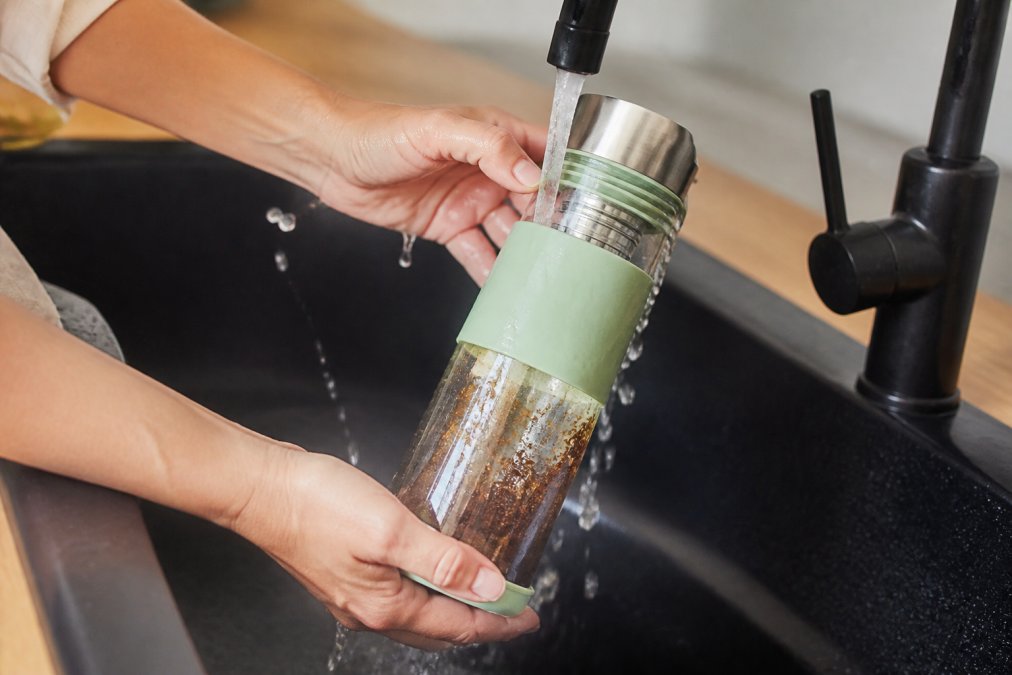
Rinse a borosilicate glass cold brew maker under warm running water or place in dishwasher
Glass cleans easily. Warm water and mild dish soap remove coffee oils from the non-porous surface. You can see inside clearly, confirming sediment is gone. Glass is dishwasher safe; stainless steel filter components should be hand-washed.
Plastic is lighter but cleaning is more involved. Coffee oils embed in the porous surface, requiring more aggressive scrubbing or soaking. Dishwashers can accelerate plastic degradation, so hand-washing is recommended. Over time, plastic doesn't get as visibly clean as glass.
Disassemble completely after each brew, rinse all components with warm water immediately, and soak the brewer in warm water with dish soap for 10-15 minutes weekly. For glass, this takes 5-10 minutes. For plastic, you may need 10-15 minutes and additional scrubbing.
Rubber or silicone seals may degrade faster in plastic brewers due to chemical interaction with the plastic surface. Seals for glass brewers can offer extended use.
Cold Brew Coffee Brewing Time and Extraction
Most brewers steep for 12-24 hours. Material choice influences extraction efficiency through thermal conductivity, a factor most guides overlook.
Borosilicate glass has a thermal conductivity of approximately 1.4 W/m·K, while polypropylene plastic is around 0.12 W/m·K (peer-reviewed research). This 10-fold difference means glass responds faster to temperature changes, while plastic insulates and buffers fluctuations.
During steeping, extraction rate is temperature-dependent. Glass brewers in a cool fridge (4°C) maintain that temperature consistently, producing predictable extraction. Plastic brewers insulate your brew, so temperature changes happen more slowly, making extraction less predictable.
For most home brewers, this difference is subtle. However, if you're chasing consistency, glass offers more predictable extraction because its thermal properties don't vary with ambient conditions.
Practical Extraction Guidelines
For cold brew coffee brewing time, the practical recommendation is 16-20 hours for most beans:
- Glass brewer, fridge storage (4°C): 18-20 hours produces smooth, balanced extraction.
- Glass brewer, counter storage (18-22°C): 16-18 hours is sufficient.
- Plastic brewer, fridge storage (4°C): 18-20 hours, with slightly less predictability.
- Plastic brewer, counter storage: 16-18 hours, with extraction consistency depending on kitchen temperature stability.
Water quality and coffee-to-water ratio matter far more than material choice. A 1:4 ratio steeped for 18 hours produces smooth, balanced cold brew regardless of material. However, if your kitchen has significant temperature swings, glass's thermal conductivity becomes an advantage, delivering more repeatable results.
Cost, Environmental Impact, and Long-Term Value
Initial cost favours plastic. A basic plastic cold brew maker costs significantly less than a glass equivalent. However, long-term value tells a different story.
A quality glass brewer like the Brew & Go Cold Brew Coffee Maker costs $69.00. A plastic brewer might cost $25-40 but may require replacement, plus seal replacements. Over time, the cost of plastic replacements can add up.
Environmental impact favours glass. Borosilicate glass is infinitely recyclable without quality degradation. Plastic is recyclable once or twice before degrading into unusable material. A glass brewer lasting a decade produces far less waste than multiple plastic replacements.
Used glass brewers can retain value. Plastic brewers, stained and worn, are rarely passed along.
The Brew & Go Bundle pairs the glass brewer with Daily Diva or Decaf Diva beans at $69.00, offering long-term value that extends beyond equipment itself.

The choice between glass and plastic cold brew makers reflects your priorities. Glass wins on longevity, chemical purity, flavour consistency, and environmental responsibility. Plastic offers shatter resistance and lower upfront cost, but introduces variables that accumulate over time.
For those seeking a cold brew ritual that supports sensitive stomachs and delivers cafe-quality results consistently, glass paired with low-acidity, responsibly sourced beans transforms your morning into something intentional. The Brew & Go Cold Brew Coffee Maker delivers this experience with borosilicate glass construction, double stainless steel filtration, and a patented pour mechanism that eliminates mess. Shop the ritual and invest in equipment that becomes part of your self-care practice rather than another kitchen gadget destined for replacement.
=== FAQ ANSWERS (audit these too, same rules) ===
[1] Q: Is glass better than plastic for cold brew coffee makers? A: Glass offers superior flavour retention and doesn't leach chemicals into your brew, making it ideal if you're sensitive to taste or stomach acidity. Plastic is more durable and affordable but can absorb stains and may leach trace compounds over time. For long-term use and pure flavour, borosilicate glass cold brew makers are a strong choice, though quality plastic options work well for durability-focused users.
[2] Q: What should I look for in a BPA-free cold brew maker? A: Ensure the brewer is explicitly labelled BPA-free and uses food-grade materials. Borosilicate glass is naturally chemical-free, while BPA-free plastic should meet food safety standards. Check that filters and seals are also BPA-free, as gaskets and lids can sometimes contain chemicals. The Brew and Go uses borosilicate glass and stainless steel, eliminating chemical leaching entirely.
[3] Q: How long does cold brew coffee brewing time take, and does material affect it? A: Cold brew typically steeps for 12-24 hours at room temperature. The brewing vessel material doesn't significantly affect steeping time, but it does affect flavour extraction. Non-porous glass allows for cleaner extraction without absorbing oils, while porous plastic can retain sediment and coffee oils. Most brewers produce smooth, ready-to-drink cold brew within 18-24 hours.
[4] Q: How do I clean a glass cold brew maker compared to plastic? A: Glass is easier to clean because it doesn't absorb stains or odours. Rinse with warm water and mild soap, then air dry. Plastic requires more attention to prevent staining and can trap coffee oils in microscopic pores, making deep cleaning harder. For glass makers with stainless steel filters, simply disassemble and rinse each component. The Brew and Go's double filtration design and smooth glass surfaces make cleaning straightforward and quick.
Frequently Asked Questions
Is glass better than plastic for cold brew coffee makers?
Glass offers superior flavour retention and doesn't leach chemicals into your brew, making it ideal if you're sensitive to taste or stomach acidity. Plastic is more durable and affordable but can absorb stains and may leach trace compounds over time. For long-term use and pure flavour, borosilicate glass cold brew makers are a strong choice, though quality plastic options work well for durability-focused users.
What should I look for in a BPA-free cold brew maker?
Ensure the brewer is explicitly labelled BPA-free and uses food-grade materials. Borosilicate glass is naturally chemical-free, while BPA-free plastic should meet food safety standards. Check that filters and seals are also BPA-free, as gaskets and lids can sometimes contain chemicals. The Brew and Go uses borosilicate glass and stainless steel, eliminating chemical leaching entirely.
How long does cold brew coffee brewing time take, and does material affect it?
Cold brew typically steeps for 12–24 hours at room temperature. The brewing vessel material doesn't significantly affect steeping time, but it does affect flavour extraction. Non-porous glass allows for cleaner extraction without absorbing oils, while porous plastic can retain sediment and coffee oils. Most brewers produce smooth, ready-to-drink cold brew within 18–24 hours.
How do I clean a glass cold brew maker compared to plastic?
Glass is easier to clean because it doesn't absorb stains or odours. Rinse with warm water and mild soap, then air dry. Plastic requires more attention to prevent staining and can trap coffee oils in microscopic pores, making deep cleaning harder. For glass makers with stainless steel filters, simply disassemble and rinse each component. The Brew and Go's double filtration design and smooth glass surfaces make cleaning straightforward and quick.
This article was written using GrandRanker


