
Table of Contents
- What to Look for in a Premium Cold Brew Maker
- Cold Drip vs Immersion Coffee Makers: Which Suits You?
- Cold Brew Coffee Ratio Guide: Getting the Balance Right
- Benefits of Low Acidity Coffee for Everyday Drinkers
- Troubleshooting Bitter or Weak Cold Brew at Home
- Sustainability, Waste, and the Cold Brew Maker You Choose
- The Brew & Glow Cold Brew Maker: Built for Daily Ritual
- Conclusion: Making the Right Choice for Your Morning
Last Updated: August 27, 2026
What to Look for in a Premium Cold Brew Maker
A cold brew maker is more than a vessel for steeping coffee. The materials it's made from, how it filters, and how it pours all determine whether your morning ritual is a pleasure or a chore. At Brew & Glow, we've spent considerable time understanding what separates a genuinely premium cold brew maker from one that looks the part but disappoints in daily use.

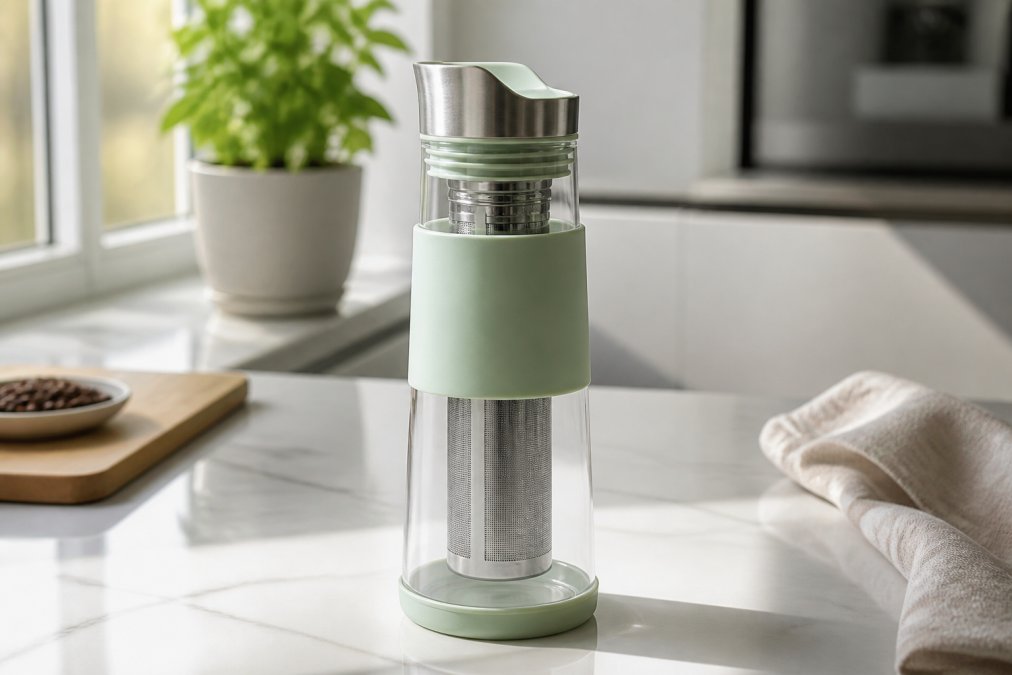
The most important factors to evaluate before buying are construction quality, filtration design, capacity, ease of cleaning, and refrigerator compatibility. Get those right, and everything else follows.
Materials: Borosilicate Glass vs Plastic
Borosilicate glass is the clear choice for cold brew makers, and not just for aesthetic reasons. This type of glass is engineered to withstand thermal shock, which means it won't crack when you move it from a warm kitchen to a cold refrigerator. It's also non-porous, so it won't absorb coffee oils or odours over time the way plastic will.
Plastic cold brew makers have one advantage: they're lighter and harder to shatter if dropped. But the trade-off is real. Many plastics, even those labelled BPA-free, can leach trace compounds into liquids over time, particularly when exposed to acidic or oily substances like coffee concentrate. For health-conscious drinkers, that's a meaningful concern.
Stainless steel components, particularly the filter and base, add structural durability without the leaching risk. The combination of borosilicate glass and stainless steel is the benchmark for a premium cold brew maker built to last.
Filtration and Sediment-Free Pouring
Filtration quality is where many cold brew makers fall short. A single mesh filter often lets fine coffee grounds pass through, leaving sediment at the bottom of your glass. Double filtration, two layers of stainless steel mesh, addresses this directly.
The pouring mechanism matters too. A well-designed cold brew maker should allow you to pour directly from the refrigerator without removing the filter, disassembling any parts, or creating mess on the bench. Paperless filtration is also worth seeking out: it's more sustainable than disposable paper filters and produces a cleaner, fuller-bodied cup without the papery aftertaste that some filters introduce.
Cold Drip vs Immersion Coffee Makers: Which Suits You?
The distinction between cold drip and immersion brewing is one that most buying guides gloss over. Understanding it properly changes which cold brew maker you should buy.
Immersion brewing is the most common method for home cold brew makers. Coffee grounds are submerged in cold or room-temperature water for an extended steeping period, typically 12 to 24 hours. The result is a smooth, full-bodied concentrate with low acidity and rich aromatic compounds. The process is forgiving, requires minimal attention, and produces consistent results across batches.
Cold drip works differently. Cold water drips slowly through a bed of coffee grounds at a controlled drip rate, usually over 3 to 8 hours. The extraction time is shorter, and the resulting brew tends to be brighter and more delicate in flavour profile. Cold drip systems are also more complex, more expensive, and considerably harder to clean.
Feature |
Immersion Brewing |
Cold Drip |
|---|---|---|
Brew time |
12-24 hours |
3-8 hours |
Flavour profile |
Rich, smooth, full-bodied |
Bright, delicate, complex |
Acidity |
Very low |
Low to moderate |
Ease of use |
Simple, hands-off |
Requires setup and monitoring |
Ease of cleaning |
Generally easy |
More components to clean |
Best for |
Daily home use |
Coffee enthusiasts, experimentation |
For most home brewers, immersion is the right call. It's simpler, more consistent, and produces the low-acid coffee concentrate that makes cold brew so appealing in the first place. Cold drip is worth exploring if you're deeply into the craft and want more control over extraction variables.
Cold Brew Coffee Ratio Guide: Getting the Balance Right
Getting your brew ratio right is the single most impactful thing you can do to improve your cold brew. The ratio determines strength, smoothness, and how far your concentrate stretches.
A cold brew concentrate is typically made at a ratio of 1:4 to 1:5 (coffee to water by weight). This produces a strong concentrate that you dilute before drinking, usually 1 part concentrate to 1-2 parts water or milk. For a ready-to-drink brew, a ratio of 1:8 is more appropriate.
Here's a practical guide for a 1-litre cold brew maker:
Desired Strength |
Coffee (grams) |
Water (ml) |
Dilution |
|---|---|---|---|
Concentrate (strong) |
150-200g |
750-800ml |
1:1 with water/milk |
Medium strength |
100-120g |
880-900ml |
Drink as is or light dilution |
Ready-to-drink (mild) |
60-80g |
920-940ml |
No dilution needed |
Always use a coarse grind for cold brew. Fine grinds increase surface area and accelerate extraction, which sounds like a good thing until you taste the bitterness and over-extraction that results. A coarse grind allows the steeping process to work slowly, drawing out sweetness and aromatic compounds without the harsh edges.
According to SCA (Specialty Coffee Association) brewing guides, grind consistency is one of the most significant variables in cold extraction quality. Inconsistent particle size leads to uneven extraction, which produces a brew that tastes simultaneously weak and bitter in different sips.
Benefits of Low Acidity Coffee for Everyday Drinkers
Low-acid coffee is not a compromise. For many drinkers, it's a genuine upgrade.
Cold brew's naturally low acidity comes from the cold extraction process itself. Heat accelerates the release of acidic compounds from coffee grounds; cold water extracts far fewer of them. The result is a coffee concentrate that's measurably gentler on the stomach, with a smoother, less sharp flavour profile.
This matters practically for people who experience acid reflux, gastritis, or general stomach sensitivity after drinking hot coffee. Many find that switching to cold brew reduces or eliminates those symptoms without requiring them to give up coffee altogether. As one Brew & Glow customer, Alex, put it: "The low acidity really makes a difference. Finally a decaf I can enjoy."
The flavour benefits extend beyond stomach comfort. Lower acidity allows the natural sweetness and aromatic compounds of quality coffee beans to come through more clearly. You taste the coffee itself, rather than a layer of sharpness sitting on top of it.
CSIRO's food and nutrition research has documented the relationship between dietary acid load and digestive comfort, supporting the practical experience many cold brew drinkers report. For those who drink coffee daily, reducing acid intake across multiple cups adds up meaningfully over time.
Troubleshooting Bitter or Weak Cold Brew at Home
Most cold brew problems trace back to one of three variables: grind size, ratio, or steeping time. Identifying which one is off is straightforward once you know what to look for.
If your cold brew tastes bitter:
- Your grind is likely too fine. Switch to a coarser grind and re-brew.
- You may have steeped too long. Beyond 24 hours, cold brew can over-extract and turn bitter, especially at room temperature.
- Check your water. Hard water with high mineral content can produce harsh-tasting brews. Filtered water generally produces a cleaner result.
If your cold brew tastes weak or watery:
- Your ratio may be off. Increase your coffee dose by 20-30g and re-test.
- Your grind may be too coarse. Slightly finer (but not fine) grounds increase extraction.
- You may not have steeped long enough. Aim for a minimum of 12 hours in the refrigerator.
If your cold brew has sediment:
- Your filter may not be sealing properly. Check that the mesh filter is seated correctly before steeping.
- You may be using pre-ground coffee that's too fine. Freshly ground, coarse coffee produces far less sediment.
According to Food Standards Australia New Zealand (FSANZ) food safety guidelines, beverages steeped at room temperature for extended periods can develop microbial activity if not handled correctly. Refrigerator steeping is both safer and produces a cleaner flavour.
Sustainability, Waste, and the Cold Brew Maker You Choose
The cold brew maker you buy has a longer environmental footprint than most people account for.
A glass and stainless steel cold brew maker, used daily for several years, produces far less waste than single-use coffee pods, disposable paper filters, or cheap plastic makers that crack and end up in landfill within 12 months. The upfront cost is higher, but the per-cup cost and the waste generated drop significantly over time.
Paperless filtration is a meaningful sustainability factor. Reusable stainless steel mesh filters eliminate the need for paper filters entirely, removing an ongoing consumable from your routine. For someone making cold brew daily, that's hundreds of paper filters per year.
Bean sourcing matters too. Responsibly sourced coffee, grown and processed with attention to environmental and social impact, produces a better cup and a cleaner supply chain. Look for transparency around sourcing practices when choosing beans to pair with your cold brew maker.
The Australian Competition and Consumer Commission (ACCC) guidance on environmental claims notes that consumers should look for specific, verifiable sustainability claims rather than vague "eco-friendly" labelling. When a brand can tell you exactly where beans come from and how the product is manufactured, that's a meaningful signal of genuine commitment rather than marketing language.
A durable, well-made cold brew maker is one of the simplest ways to reduce kitchen waste without sacrificing quality. Buy once, buy well.
The Brew & Glow Cold Brew Maker: Built for Daily Ritual
Some cold brew makers are designed for occasional use. The Brew & Glow cold brew maker is designed for every morning.
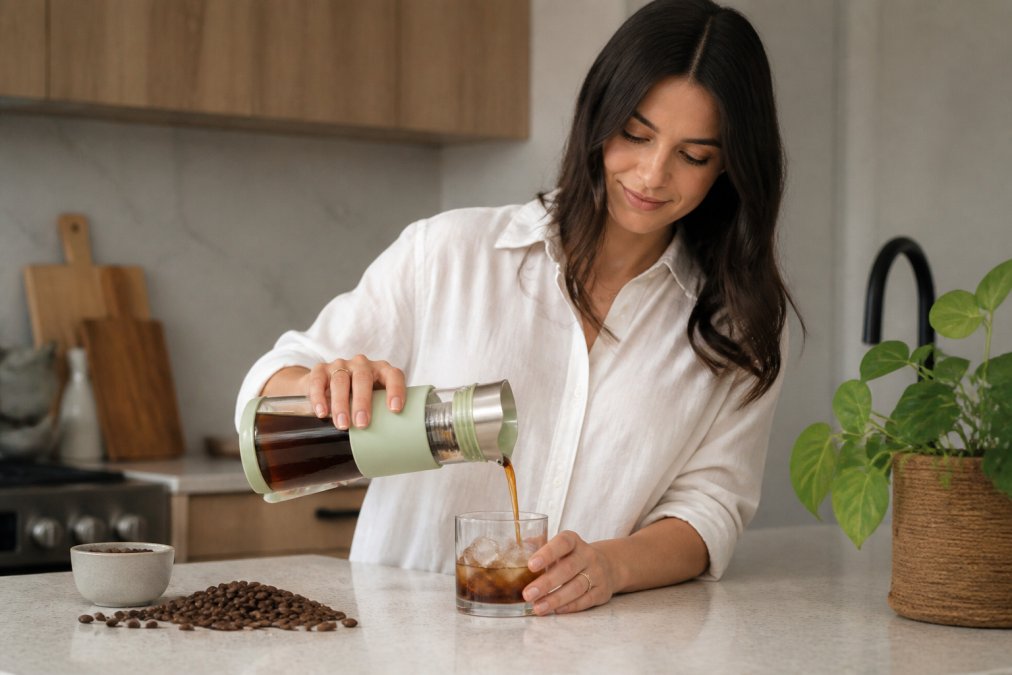
The design philosophy behind Brew & Glow is that your coffee routine should feel effortless, not like a project. That means materials that last, a pour mechanism that doesn't make a mess, and a footprint that fits in the refrigerator door without rearranging everything else. The cold brew maker is built from borosilicate glass and stainless steel, with a shock-proof silicone base and double stainless steel filtration that produces genuinely sediment-free pouring.
Brew and Go Cold Brew Coffee Maker ($69)
The Brew and Go Cold Brew Coffee Maker is priced at $69 and represents the complete cold brew setup for daily home use.
What's included and how it works:
The maker produces 1 litre of cold brew concentrate per batch, which translates to roughly 8-10 cups depending on your dilution preference. The patented pour mechanism means you can pour directly from the refrigerator without removing the filter or creating mess. Double stainless steel filtration ensures the brew is clean and sediment-free every time.
Pros:
- Borosilicate glass and stainless steel construction
- Shock-proof silicone base for durability
- Patented pour lid for mess-free serving
- Fits in standard refrigerator doors
- Reusable stainless steel filters (no paper filters needed)
- 1-litre capacity suitable for daily use
Cons:
- 12-24 hour brew time requires planning ahead
Customer Monica's experience captures it well: "The Brew and Go is genius. Clean, simple and no mess at all."
Brew & Go Bundle: Maker Plus Beans ($69)
The Brew & Go Bundle pairs the Brew and Go cold brew maker with a packet of Brew & Glow's own coffee beans, either the Daily Diva or Decaf Diva blend, at the same $69 price point.

The bundle makes particular sense for anyone who wants to start with the right beans alongside the right maker. Brew & Glow's beans are responsibly sourced, roasted and packaged sustainably, and the Decaf Diva option uses Swiss water decaffeination, a chemical-free process that preserves the coffee's natural flavour profile without the acidity or caffeine.
For anyone managing acid reflux or caffeine sensitivity, the decaf option paired with cold brew's naturally low-acidity extraction is a meaningful combination. The low-acidity profile of cold brew, combined with Swiss water decaf beans, produces a cup that's genuinely gentle on the stomach without tasting like a compromise.
Best for: Anyone starting their cold brew routine who wants the maker and beans sorted in one order, or anyone who wants to try Brew & Glow's responsibly sourced coffee without committing to a larger bean purchase separately.
Frequently Asked Questions
What is the difference between cold brew and cold drip coffee?
Cold brew uses immersion brewing: coarse coffee grounds steep in cold or room-temperature water for 12 to 24 hours, producing a smooth, low-acid concentrate. Cold drip passes cold water slowly through grounds drop by drop, typically over 3 to 8 hours. Cold brew is simpler to make at home and more forgiving with grind size. Cold drip produces a lighter, more delicate flavour but requires a more complex, often expensive apparatus.
What are the benefits of low-acidity cold brew coffee?
Cold brew coffee is generally smoother and gentler on the stomach than hot-brewed coffee because the cold extraction process draws fewer acidic compounds from the grounds. For people with acid reflux, sensitive stomachs, or tooth enamel concerns, a low-acid cold brew can mean enjoying coffee without the discomfort. Pairing a cold brew maker with beans specifically roasted and sourced for low acidity, as Brew & Glow offers, compounds this benefit further.
How long does cold brew coffee stay fresh in the fridge?
Cold brew concentrate stored in an airtight glass container in the refrigerator typically stays fresh for up to 14 days. Diluted cold brew is best consumed within 3 to 4 days. The key factors are an airtight seal to prevent oxidation and consistent refrigerator temperature. Glass containers like the Brew and Go cold brew maker are preferable to plastic because they do not absorb odours or leach compounds that affect the flavour profile over time.
Is a premium cold brew maker worth the investment compared to buying cafe cold brew?
A single cold brew from a cafe typically costs $6 to $8. At that rate, a $69 cold brew maker pays for itself within two to three weeks of home brewing. Beyond cost, a quality glass and stainless steel maker like the Brew and Go produces a full litre of concentrate per batch, gives you control over the brew ratio and coffee beans, and eliminates single-use packaging. For anyone drinking cold brew more than twice a week, the numbers favour home brewing quickly.
This article was written using GrandRanker


