

Table of Contents
- Is Cold Brew Worth the Price? The Real Cost Comparison
- Cost of Homemade Cold Brew vs. Cafe-Bought
- Equipment Requirements and Initial Investment
- How to Make Cold Brew at Home: Process and Efficiency
- Why Is My Cold Brew Bitter? Avoiding Costly Mistakes
- Quality, Shelf Life, and Acidity: What You're Paying For
- The Environmental and Wellness Case for Home Brewing
- Conclusion: Making the Decision
Last Updated: August 30, 2026
Is Cold Brew Worth the Price? The Real Cost Comparison
Good cold brew is amazing, but buying cafe cold brew is expensive, making it at home will save thousands of dollars a year. Whether is cold brew worth the price depends entirely on what you're comparing and what matters to you.
The conversation isn't about cold brew itself, it's about trade-offs: convenience versus cost, quality versus effort. Some people will save money brewing at home. Others won't, not because the maths doesn't work, but because their lifestyle doesn't support consistency. Some will pay premium prices for cafe cold brew and feel it's worth every dollar because of the ritual and time saved. Neither choice is wrong. The question is which trade-off suits your life.
Cost of Homemade Cold Brew vs. Cafe-Bought
A typical cafe cold brew costs between $5-$7 per serve. Buy one daily, and you're looking at roughly $1,825-$2,555 per year. Many people buy 3-5 times weekly, reducing annual spend to $780-$1,825.
Homemade cold brew costs significantly less per serve. A kilogram of quality beans runs $20-$35 and makes roughly 40-50 serves of cold brew concentrate (usda.gov). That's $0.40-$0.88 per serve before equipment. Add in water and filters, and you're looking at $0.50-$1.00 per serve of finished cold brew.
This comparison only works if three conditions are met: you brew consistently, you don't waste batches, and you actually drink what you make. Many home brewers fail on at least one of these fronts.
The real break-even point depends on your actual cafe spending. If you're a daily buyer at $6 per serve, home brewing saves money within 2-3 months. If you're an occasional buyer once or twice weekly, the payoff takes 8-12 months.
Equipment Requirements and Initial Investment
A basic cold brew maker costs $30-$60, though these often lack durability and produce sediment. Mid-range brewers cost $50-$100 and include better filtration and longer-lasting materials. Premium brewers run $100-$150 and beyond, featuring patented filtration systems and borosilicate glass construction.
A starter bundle with beans and brewer costs $60-$100. Quality, low-acidity beans add $5-$10 per kilogram compared to budget options. If you're sensitive to acidity, this premium is non-negotiable.
The total initial investment for a setup that produces quality cold brew: $80-$150, including equipment and beans.
At daily cafe spending of $6, this investment pays for itself in roughly 2-3 weeks of brewing. At twice-weekly cafe spending, it takes 2-3 months.
How to Make Cold Brew at Home: Process and Efficiency

Start with a coarse grind. Most cold brew uses a 1:4 or 1:5 coffee-to-water ratio by weight. For a one-litre batch, that's roughly 200 grams of coarse ground coffee to 800 millilitres of water.
Add grounds to your brewer, pour in cold water, stir gently to ensure all grounds are wet, and seal. Place it in the fridge for 12-24 hours. After steeping, filter carefully to eliminate sediment. Dilute your concentrate with water or milk to taste. Most people use a 1:1 or 1:2 ratio of concentrate to liquid.
Total active time: roughly 5 minutes. Total yield: enough cold brew for 7-14 serves, depending on consumption and dilution preference.
The efficiency question is whether you'll actually brew on schedule. Many people brew sporadically and end up buying cafe cold brew anyway. Others brew every Sunday like clockwork. Your personality determines the real value of home brewing.
Why Is My Cold Brew Bitter? Avoiding Costly Mistakes
Bitterness usually signals one of three problems: over-extraction, oxidation, or poor-quality beans.
Over-extraction happens when steeping time exceeds 24 hours or when the grind is too fine. Most cold brew reaches optimal extraction between 12-16 hours (peer-reviewed research). Beyond that, you're chasing diminishing returns and risking a harsh taste.
Oxidation occurs when cold brew sits exposed to air or in clear glass under light. A sealed, opaque container keeps cold brew fresh for 10-14 days. Clear glass in direct sunlight can degrade quality within 5-7 days.
Poor bean quality is the third culprit. Budget beans often have defects that amplify in cold brew because the long steeping time extracts every flaw. Specialty-grade beans cost more upfront but eliminate this problem entirely.
Quality, Shelf Life, and Acidity: What You're Paying For
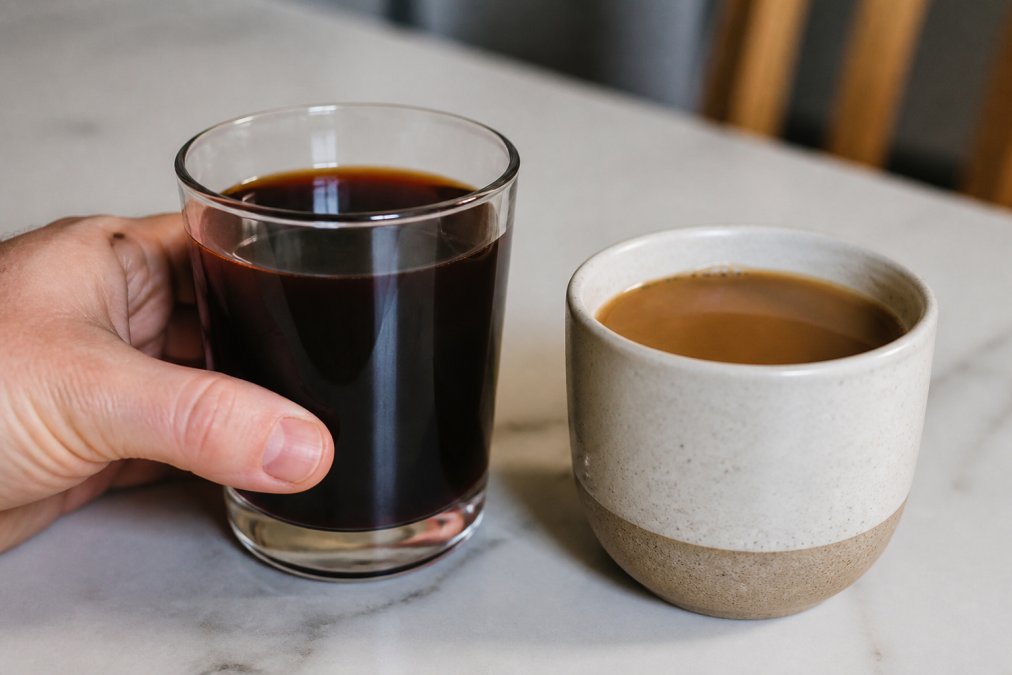
Cold brew's defining characteristic is low acidity. Because cold water extracts more slowly than hot water, fewer acidic compounds make it into your cup. This matters if you have a sensitive stomach or acid reflux.
Cafe cold brew varies wildly in quality. Some cafes brew it properly and serve it fresh. Others brew it once a week and serve it oxidised and stale. Home brewing gives you control: you know exactly when it was brewed, how it was stored, and whether it's fresh.
A batch of cold brew concentrate keeps for 10-14 days in the fridge, sealed. That's a week or more of ready-to-drink coffee with zero preparation time. Cafe cold brew, once purchased, is good for a few hours at best.
Quality beans make a measurable difference. Specialty-grade, responsibly sourced beans are more expensive than commodity coffee, but the flavour gap is obvious. In cold brew, every flaw is exposed. If you're paying premium prices for cafe cold brew, you're often paying for quality beans. Home brewing lets you access the same quality at a fraction of the per-serve cost.
The Environmental and Wellness Case for Home Brewing
Cafe cold brew usually comes in single-use plastic or paper cups. If you're buying one daily, that's 365 cups per year going to landfill or recycling. Home brewing eliminates this waste entirely.
Making cold brew at home is a small ritual, something you control and own. For people who value mindfulness in their morning routine, home brewing transforms coffee from a transaction into a practice. Many people report that the ritual changes their relationship with coffee. It becomes part of self-care rather than just caffeine consumption.
For environmentally conscious consumers, home brewing aligns values with action. You're reducing plastic waste, supporting responsibly sourced coffee farmers, and eliminating the carbon footprint of cafe visits.
Conclusion: Making the Decision
Is cold brew worth the price? The answer depends on what price you're measuring.
If you're measuring pure cost per serve, home brewing wins decisively. A daily cafe cold brew costs roughly $2,190 per year; home brewing costs $180-$365 annually.
But if you're measuring time, convenience, and consistency, cafe cold brew wins for some people. There's no prep time, no storage worry, and no risk of running out. If your lifestyle doesn't support weekly brewing or if you only buy cold brew occasionally, the savings don't justify the effort.
The sweet spot for home brewing is someone who drinks cold brew 3-5 times weekly, values quality and low acidity, and can commit to a simple weekly routine. If that's you, home brewing saves money, reduces waste, and gives you better control over quality.
For most people who drink cold brew regularly, home brewing is genuinely worth it, both financially and in terms of quality and sustainability. Start with equipment built to last and beans sourced for smoothness. The Brew & Glow Brew and Go Bundle combines a premium brewer with responsibly sourced, low-acidity beans, designed specifically for people who want cafe-quality cold brew at home without the complexity or waste. Shop the ritual and discover whether home brewing fits your life.

Frequently Asked Questions
Is it cheaper to make cold brew at home compared to buying it at a cafe?
Yes, significantly. Home-brewed cold brew costs roughly $0.50–$1.00 per serving, while cafe cold brew typically ranges from $4–$6 per drink. After accounting for equipment (a quality cold brew maker costs around $69), you break even within 2–3 months and save thousands annually. The cost-per-serving advantage widens the longer you brew at home, making it one of the most cost-effective ways to enjoy cafe-quality coffee daily.
What equipment do I need to start making cafe-quality cold brew at home?
A cold brew maker with proper filtration is essential—look for one with double stainless steel filtration and borosilicate glass construction to prevent sediment and bitterness. You'll also need coarse-ground, quality coffee beans and filtered water. A basic setup with a premium cold brew maker and a bag of responsibly sourced beans gives you everything needed for smooth, sediment-free cold brew that rivals cafe standards without the markup.
Why is my cold brew bitter, and how do I avoid it?
Bitterness usually stems from over-steeping, using fine grounds instead of coarse, or poor water quality. Cold brew requires 12–24 hours of immersion brewing with coarse grounds; finer grounds extract too quickly and release harsh compounds. Use filtered water, maintain the correct coffee-to-water ratio (typically 1:4 to 1:5), and don't exceed your steeping time. A maker with reliable filtration also prevents sediment from settling into your final cup, which contributes to unpleasant bitterness.
Does homemade cold brew stay fresh as long as cafe-bought versions?
Quality homemade cold brew stays fresh and smooth for up to 14 days when stored properly in the refrigerator, thanks to the low-acidity extraction process and minimal oxidation during immersion brewing. Cafe-bought cold brew often contains preservatives to extend shelf life. When you brew at home with quality beans and a well-sealed maker, you control freshness entirely and avoid the oxidation that can turn concentrate bitter after a few days of exposure to air.
This article was written using GrandRanker


