
Table of Contents
- Why Your Cold Brew Turns Bitter: The Core Problem
- Cold Brew Steep Time: How Long Is Too Long?
- Cold Brew Grind Size Guide: Why Coarseness Matters
- Coffee Bean Quality, Roast Level and Freshness
- Water Quality, Ratio and Mineral Content
- How to Dilute Cold Brew Concentrate Without Ruining the Flavour
- How to Fix Bitter Cold Brew: A Step-by-Step Troubleshooting Guide
- Conclusion
Last Updated: August 23, 2026
Why Your Cold Brew Turns Bitter: The Core Problem
Cold brew bitterness is one of the most common complaints from home brewers, and it's almost always fixable. Understanding the cause is the first step to never pouring a batch down the drain again.
Over-extraction is the extraction of too many compounds from coffee grounds during brewing, producing harsh bitterness that overwhelms the coffee's natural sweetness. Cold brew works through immersion: grounds sit in cold water, and water gradually pulls out flavour compounds in sequence. Sweetness and acids come out first, followed by body and pleasant bitterness. Harsh tannins come last. The goal is to stop before that final wave dominates.
Over-extraction happens when too many late-stage compounds make it into your brew. The triggers are predictable: too-fine a grind, too long a steep, too warm an environment, or too high a coffee-to-water ratio. Cold water does slow extraction compared to hot brewing, but given enough time or a fine enough grind, it will pull bitter compounds just as aggressively.
Sour vs. Bitter: Knowing the Difference
Sourness signals under-extraction: the brew stopped too early, before enough pleasant flavour compounds were drawn out. Sour cold brew tastes sharp, almost vinegary, and lacks body.
Bitterness signals over-extraction: the brew ran too long or too fine, pulling harsh compounds after desirable ones were already extracted.
Diagnosing correctly before adjusting is critical. Sour is a sharp, mouth-puckering sensation at the sides of the tongue; bitter is a lingering, coating sensation at the back.
Cold Brew Steep Time: How Long Is Too Long?
Steep time is the single most influential variable in cold brew extraction. The practical sweet spot for most coarse-ground, medium-roast cold brew is 14 to 18 hours in the refrigerator. Beyond 20 hours, many brews begin accumulating bitter, astringent notes from over-extracted tannins. Beyond 24 hours, the result is almost universally too harsh to drink straight.
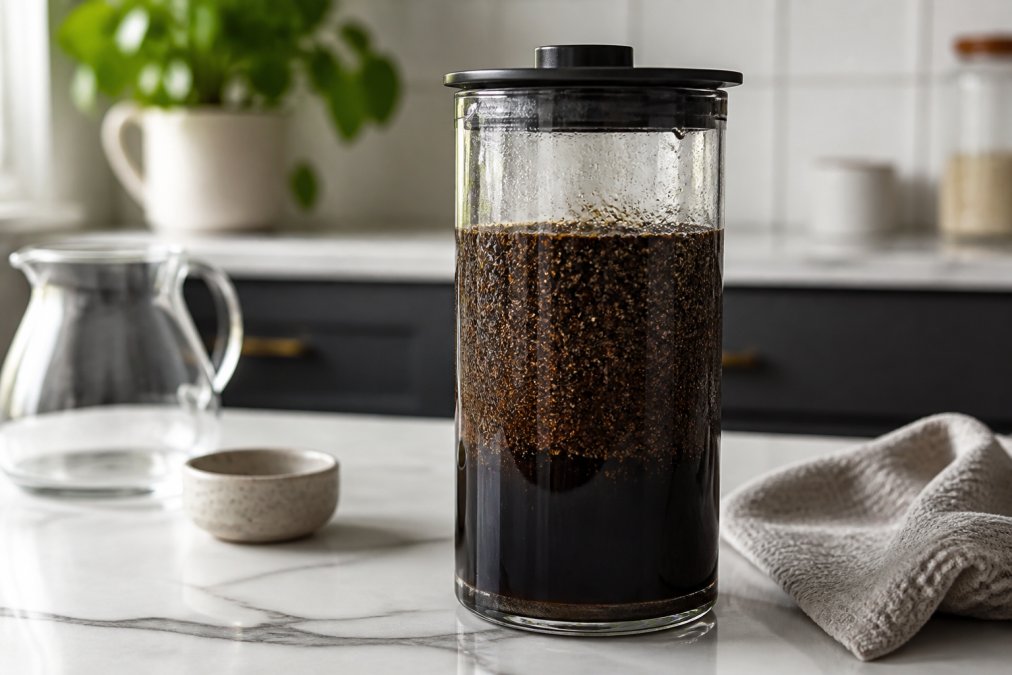
Steeping at room temperature accelerates extraction significantly. What takes 18 hours in the fridge can happen in 8 to 12 hours at room temperature. Room-temperature steeping requires closer monitoring and a shorter window.
The relationship between steep time and grind size is multiplicative, not additive. A slightly-too-fine grind combined with a slightly-too-long steep produces bitterness far worse than either factor alone. According to the Specialty Coffee Association's brewing resources, extraction variables interact in non-linear ways, which is why experienced brewers adjust one variable at a time.
| Steep Environment | Recommended Time | Risk Threshold |
|---|---|---|
| Refrigerator (2-4°C) | 14-18 hours | Over 20 hours |
| Cool room (15-18°C) | 10-14 hours | Over 16 hours |
| Room temperature (20-24°C) | 8-12 hours | Over 14 hours |
Cold Brew Grind Size Guide: Why Coarseness Matters
Grind size controls the surface area of coffee exposed to water. A finer grind means more surface area, faster extraction, and a dramatically higher risk of pulling bitter compounds.
For cold brew, a coarse grind is non-negotiable. The target is roughly the texture of raw sugar or coarse sea salt: visibly chunky, with no powdery fine particles. A grind meant for espresso or pour-over is far too fine and will produce a bitter, murky result.
Many home grinders produce inconsistent particle sizes, including fine particles called "fines" that extract rapidly and contribute bitterness. A burr grinder produces far more consistent results than a blade grinder, which chops randomly and creates many particle sizes in every batch.
Coffee Bean Quality, Roast Level and Freshness
The bean itself is often the overlooked variable. Grind size and steep time cannot rescue low-quality, stale, or poorly matched coffee.
Dark Roast vs. Light Roast for Cold Brew
Dark roasts are more soluble than light roasts because extended roasting breaks down cell structure, making extraction faster. This means dark roasts are more prone to over-extraction in cold brew, particularly at longer steep times.
Light and medium roasts tend to produce brighter, more complex cold brew with natural sweetness and acidity. Many cold brew specialists favour medium roasts because they balance extraction speed with flavour complexity. Dark roast cold brew requires a coarser grind and shorter steep to avoid harsh, burnt-tasting bitterness.
How Stale Grounds Amplify Bitter Notes
As coffee ages after roasting, it oxidises. Oxidation degrades pleasant aromatic compounds and leaves behind a higher proportion of bitter, flat-tasting ones. Stale grounds also produce more sediment during brewing, which contributes to both bitterness and an unpleasant gritty mouthfeel.
Coffee is generally considered fresh for four to six weeks after roasting when stored correctly in an airtight container away from heat and light (peer-reviewed research). Pre-ground coffee goes stale significantly faster than whole beans because grinding dramatically increases surface area exposed to oxygen.
Water Quality, Ratio and Mineral Content
Water quality is the variable that rarely gets the attention it deserves, despite having a measurable effect on both extraction efficiency and flavour.
Getting Your Brewing Ratio Right
The standard cold brew concentrate ratio is 1:4 by weight (coffee to water), or roughly 100g of coffee per 400ml of water. For a ready-to-drink brew, a 1:8 ratio is more common.
Using too much coffee relative to water is a straightforward path to bitterness. The grounds are over-saturated, extraction is uneven, and the resulting concentrate is harsh. Many home brewers inadvertently use too high a ratio when measuring by volume rather than weight, because coffee grounds vary significantly in density depending on roast level and grind size. Weighing your coffee and water produces far more consistent results.
Total Dissolved Solids and Water Chemistry
Total Dissolved Solids (TDS) refers to the concentration of dissolved minerals in water, primarily calcium and magnesium. These minerals actively interact with coffee compounds during extraction, affecting which flavours are pulled out and how efficiently.
Water with very low TDS, such as distilled or heavily filtered water, actually under-extracts coffee. Water with very high TDS can over-extract or produce metallic, chalky flavours. The ideal range for coffee brewing is generally 75 to 150 mg/L of TDS, as outlined in the Specialty Coffee Association's water quality standard. If you have tried adjusting every other variable and still cannot eliminate bitterness, your water chemistry is worth investigating.
How to Dilute Cold Brew Concentrate Without Ruining the Flavour
Cold brew concentrate is designed to be diluted. The standard dilution ratio is 1:1 with water or milk, but this is a starting point, not a rule. The most common mistake is under-diluting. Concentrate that is too strong tastes bitter and harsh even when the brewing process was technically correct.
Start with a 1:1 ratio and adjust from there based on taste. Use cold water, cold milk, or pour directly over ice to preserve aromatics. Avoid adding hot water, which can trigger secondary extraction from residual grounds. If using ice, brew slightly stronger to compensate for dilution as it melts. Sediment in the final cup also concentrates bitterness, so a clean pour matters.
How to Fix Bitter Cold Brew: A Step-by-Step Troubleshooting Guide
Bitter cold brew is a diagnostic problem. Work through these steps in order, adjusting one variable at a time.
- Taste and classify the bitterness. If there is sourness, the fix is more steep time or a finer grind. If it is purely bitter with no acidity, proceed to the next steps.
- Check your steep time. If you steeped longer than 18 hours in the fridge or longer than 12 hours at room temperature, shorten the next batch by two to four hours.
- Check your grind size. If grounds feel fine or powdery, move to a coarser setting.
- Check your ratio. Weigh your coffee and water. If you have been measuring by volume, switch to weight.
- Check your beans. Smell the grounds before brewing. If they smell flat or have been open for more than six weeks, use fresh beans.
- Check your water. If you use heavily softened or filtered water, try standard filtered tap water for the next batch.
- Check your dilution. Taste the concentrate before diluting. If it is bitter at full strength, the issue is in the brew. If it tastes acceptable at full strength but bitter when diluted, you are under-diluting.
Equipment-Specific Fixes
Mesh filters with too-fine a mesh can trap grounds unevenly, leading to localised over-extraction. Stir the grounds gently before steeping to ensure even water contact.
Paper filters used as a secondary filter after steeping can remove both sediment and some of the oils that carry bitterness. If your brew is consistently slightly bitter despite correct steep time and grind, a paper filter pass can noticeably clean up the cup.
Plastic brewing vessels can leach trace compounds into cold brew over a long steep, adding off-flavours that register as bitterness. Switching to borosilicate glass or stainless steel eliminates this variable. The Brew & Glow cold brew maker uses borosilicate glass construction for this reason: a 16-hour steep in glass is not the same experience as a 16-hour steep in plastic.
Bitter cold brew is a solvable problem, but solving it consistently requires the right starting point: quality beans, inert equipment, and a reliable brewing process. Brew & Glow's patented cold brew maker combines borosilicate glass construction with a clean, sediment-free pour mechanism, so the equipment itself stops adding variables to your cup. Paired with responsibly sourced, low-acidity beans designed specifically for smooth cold brew extraction, it removes the most common causes of bitterness before you even start. Shop the ritual and taste the difference a considered setup makes.
Frequently Asked Questions
Why does my cold brew taste bitter even after a short steep?
Bitterness that appears quickly usually points to grind size rather than steep time. If your coffee grounds are too fine, water extracts bitter tannins and harsh flavour compounds rapidly, even within 8 hours. Check that you're using a coarse grind, roughly the texture of raw sugar. Fine grounds dramatically increase the extraction yield per hour, overwhelming the sweeter, more delicate notes before the steep is anywhere near finished.
Does grind size affect the bitterness of cold brew?
Yes, grind size is one of the biggest variables in cold brew bitterness. A finer grind exposes far more surface area to water, accelerating extraction and pulling bitter compounds like tannins and caffeine rapidly into your brew. A coarse grind slows this process, giving you a smoother, more balanced flavour profile. For cold brew specifically, aim for a coarser grind than you'd use for drip or pour-over coffee.
How do you take the bitterness out of cold brew after it's already brewed?
If your cold brew is already bitter, dilution is the fastest fix. Add cold filtered water or milk gradually until the harsh notes soften, a 1:1 ratio of concentrate to water is a good starting point, then adjust to taste. A small pinch of salt can also blunt bitterness without adding flavour. For future batches, shorten your steep time, switch to a coarser grind, or try lower-acidity beans to prevent the problem from recurring.
What is the ideal cold brew steep time to avoid bitterness?
Most cold brew benefits from 12 to 18 hours of steeping in the refrigerator. Steeping beyond 20 to 24 hours increases the risk of over-extraction, which draws out bitter tannins and dulls the naturally smooth, low-acidity character of a well-made cold brew. Room-temperature steeping moves faster, 8 to 12 hours is usually sufficient, so watch your batch closely if you're not brewing in the fridge.
This article was written using GrandRanker


