
Table of Contents
- What Makes Cold Brew Lower in Acidity
- Choosing the Right Coffee Beans for Low Acidity
- Cold Brew Coffee Ratio for Low Acidity
- Step-by-Step Brewing Guide for Smooth, Low Acidity Cold Brew
- Benefits of Low Acid Coffee for Sensitive Stomachs
- Common Mistakes to Avoid When Brewing Low Acidity Cold Brew
- Conclusion
Last Updated: August 27, 2026
What Makes Cold Brew Lower in Acidity
Cold brew coffee achieves lower acidity through a fundamentally different extraction process than traditional hot brewing. When you immerse coarse coffee grounds in cold water for an extended period, the cold temperature slows the extraction of acids and tannins, the compounds responsible for that sharp, stomach-irritating bite (peer-reviewed research). Hot water aggressively extracts chlorogenic acid and other harsh compounds, while cold water extracts these far more slowly and selectively, resulting in a smooth concentrate without the harshness.
The immersion brewing process explained
Immersion brewing works by submerging coffee grounds directly in cold water and letting time do the work. Unlike pour-over or espresso methods where hot water passes through grounds quickly, immersion keeps everything in contact for hours. The grounds release flavour compounds gradually, the desirable ones first, the harsh acidic ones much more slowly. This extended contact time at low temperature creates a fundamentally different chemical profile in your final cup.
Why steeping time matters for pH levels
Most of the acid reduction happens in the first 12 hours of steeping (peer-reviewed research). After that, additional time yields diminishing returns on acidity reduction, though flavour continues to develop. Steeping for 16 to 24 hours strikes the balance between maximum acidity reduction and optimal flavour extraction. Underbrew your cold brew and you'll taste the difference immediately, thinner, more acidic, and less satisfying. Overbrew it beyond 24 hours and you risk over-extraction, which introduces bitterness.
Choosing the Right Coffee Beans for Low Acidity
Not all coffee beans are created equal when it comes to acidity. The roast level, origin, and processing method all influence how acidic your final brew will be. Dark roast beans naturally contain less chlorogenic acid than light roasts because the roasting process breaks down these acid compounds through heat (peer-reviewed research).
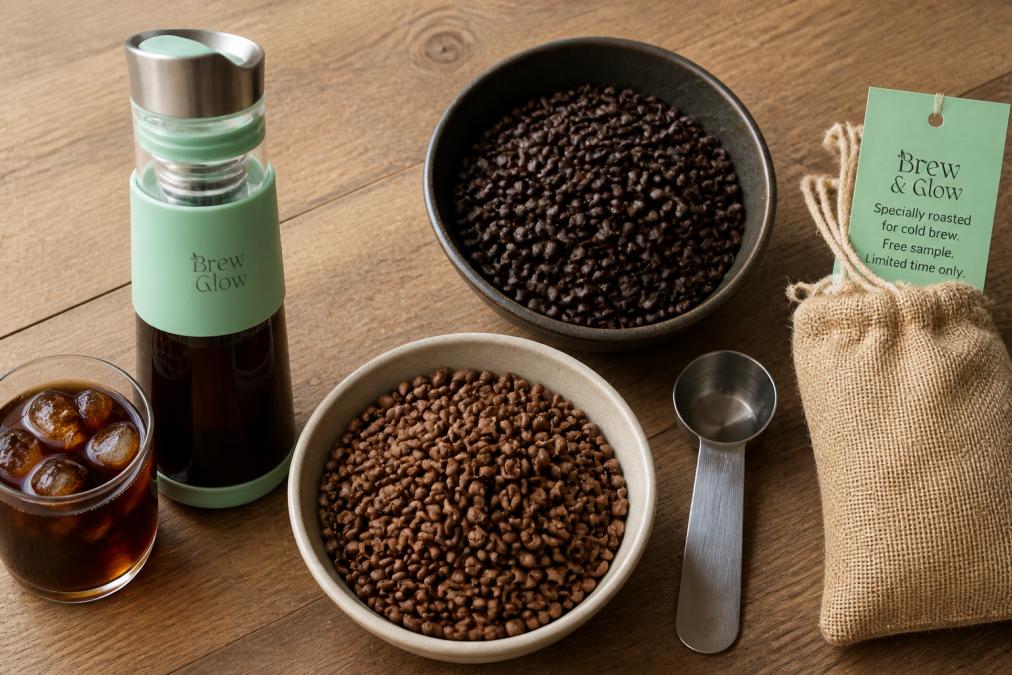
Dark roast versus medium roast beans
Dark roast beans are your best choice for making low acidity cold brew. The extended roasting time caramelises sugars and breaks down chlorogenic acid, leaving you with a naturally less acidic bean. Dark roasts also tend toward deeper, chocolatey flavours that pair beautifully with cold brewing. Medium roast beans fall somewhere in the middle, less acidic than light roasts but not quite as forgiving as dark. Light roast beans retain more of their original acids and are generally not recommended if you're brewing for a sensitive stomach.
Brew & Glow's beans are specially roasted for cold brew makers, designed to extract smoothly without bitterness or harshness.
Bean processing methods and their impact
How beans are processed after harvest affects their final acidity. Washed (wet-processed) beans tend to be brighter and more acidic. Natural (dry-processed) beans, where the whole fruit dries on the bean, often have lower acidity and sweeter profiles. Honey-processed beans fall between the two. For low acidity cold brew, natural and honey-processed beans are your allies. Look for beans that specify their processing method on the package, this tells you the producer cares about quality and transparency.
Cold Brew Coffee Ratio for Low Acidity
The coffee-to-water ratio you use dramatically affects both the strength and acidity of your final brew. The ideal ratio for low acidity cold brew is roughly 1 part coarse grounds to 4 parts filtered water by weight. This 1:4 ratio creates a concentrate you can dilute to your preferred strength.
Water-to-grounds ratio guidelines
The 1:4 ratio is a reliable starting point, but your exact preferences may vary. If you prefer stronger cold brew, try 1:3. If you like it milder, go with 1:5. Measure by weight rather than volume, coffee grounds compress differently depending on how you scoop them. For a standard litre of cold brew concentrate, use roughly 200 grams of coarse grounds and 800 millilitres of filtered water. Once brewed, store your concentrate in the refrigerator for up to two weeks.
How water chemistry affects extraction
Filtered water removes impurities like minerals and chlorine that can interfere with extraction and flavour. Room-temperature filtered water is the sweet spot for consistent results. Avoid distilled water, which lacks minerals and can result in flat-tasting brew. Filtered tap water strikes the right balance between purity and mineral content.
Step-by-Step Brewing Guide for Smooth, Low Acidity Cold Brew
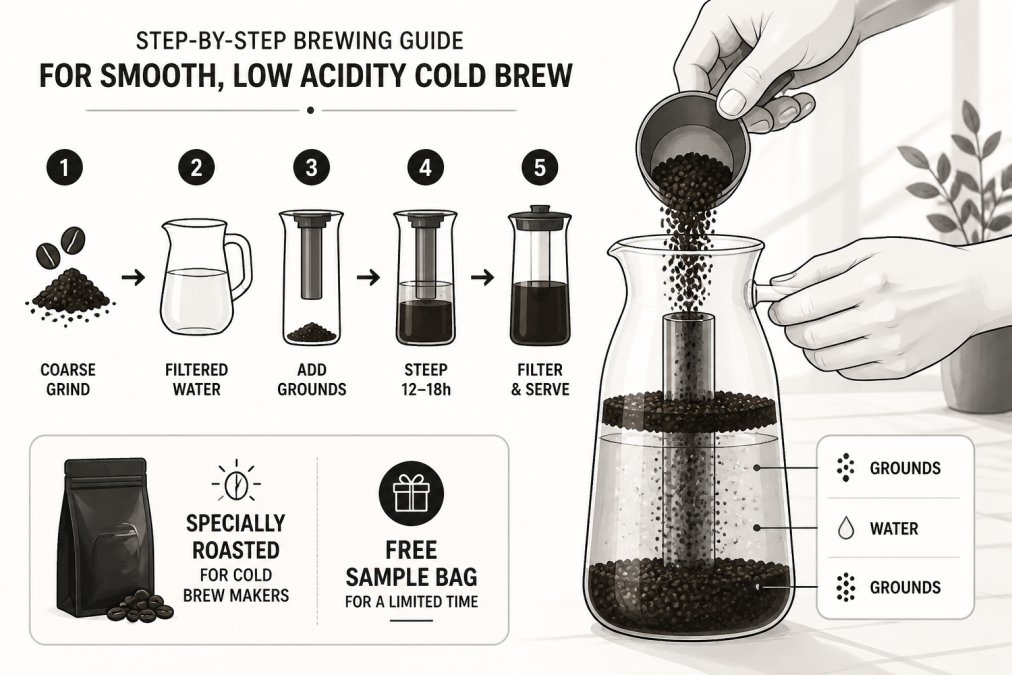
Making low acidity cold brew at home is straightforward. The entire procedure takes about five minutes of active work, followed by 16 to 24 hours of steeping.
Step 1: Select and grind your beans
Start with freshly roasted dark roast or medium roast beans. Grind your beans just before brewing to preserve essential oils and volatile compounds. You want a coarse grind, similar to the texture of breadcrumbs or sea salt. Fine grounds will over-extract and turn your brew bitter; too coarse and you'll under-extract, leaving it thin and acidic. If you don't have a grinder, many specialty coffee roasters will grind beans to order for cold brew. Brew & Glow's specially roasted beans are engineered to deliver optimal extraction at the right grind size.
Step 2: Prepare filtered water
Fill a kettle or jug with filtered water at room temperature. Avoid tap water if your local supply is heavily chlorinated or mineral-rich. Measure out the amount you need based on your coffee-to-water ratio. For a litre of concentrate using the 1:4 ratio, you'll need 800 millilitres of filtered water and 200 grams of coarse grounds.
Step 3: Layer grounds and water
Pour a small amount of your filtered water into your brewing vessel first, just enough to wet the grounds lightly. Add your coarse grounds and stir gently to ensure they're all saturated. This initial wetting prevents dry pockets from forming. Once the grounds are wet, pour in the remaining water slowly, stirring occasionally to ensure even saturation.

Step 4: Steep for 16 to 24 hours
Cover your brewing vessel and place it in the refrigerator. Set a timer for 16 hours minimum. If you prefer a stronger brew or slightly lower acidity, extend the steep to 20 or 24 hours. Avoid disturbing the brew during steeping, the cold water will extract compounds slowly and steadily on its own.
Step 5: Filter and dilute to taste
After steeping, pour the brew slowly through a fine-mesh filter or cheesecloth into a clean jar. Your cold brew concentrate is now ready and will keep in the refrigerator for up to two weeks. To drink, dilute with equal parts water, milk, or milk alternative. Adjust the ratio based on how strong you like your coffee.
Benefits of Low Acid Coffee for Sensitive Stomachs
Making the switch to low acidity cold brew can genuinely transform your morning routine if you've struggled with stomach sensitivity. The smoother extraction process and lower chlorogenic acid content mean your body absorbs the coffee differently, with far less irritation and gastrointestinal distress.
Reduced gastrointestinal distress
People with acid reflux, gastritis, or general stomach sensitivity often find that regular coffee triggers discomfort within minutes of drinking it. Low acidity cold brew eliminates most of these irritants through the immersion extraction process, leaving behind a brew that's gentler on your digestive system. Many people find they can enjoy coffee again without the afternoon acid reflux or stomach upset they'd resigned themselves to.
Smoother flavour and less bitterness
Beyond the health benefits, low acidity cold brew simply tastes better to most people. The smooth, sweet character of a well-brewed cold brew concentrate is closer to what you'd find in a premium cafe. Without the harsh acidity masking the bean's natural flavours, you taste the origin, the roast, and the care that went into producing the coffee. Dark roast beans brewed cold develop chocolatey, caramel notes that hot brewing often destroys.
Common Mistakes to Avoid When Brewing Low Acidity Cold Brew
Most cold brew failures come from a handful of preventable mistakes. Using the wrong grind size is the first, fine grounds over-extract and create harsh, unpleasant brew, while coarse grounds under-extract, leaving your coffee thin and acidic. Invest in a burr grinder and dial in a coarse setting.
The second mistake is using tap water without filtering it. Chlorine and minerals interfere with extraction and can create off-flavours. Filtered water is cheap insurance against ruined batches.
The third mistake is not measuring your coffee-to-water ratio. Eyeballing it leads to inconsistency. Use a kitchen scale and stick to the 1:4 ratio until you understand how your specific beans and water behave.
The fourth mistake is steeping for too long. Beyond 24 hours, you risk over-extraction and bitterness. Set a timer and stick to it.
The fifth mistake is not stirring during the initial saturation. Dry pockets in your grounds lead to uneven extraction and weak spots in your brew.
Making low acidity cold brew at home is one of the simplest ways to improve your morning routine if you struggle with stomach sensitivity. The smooth flavour, reduced acidity, and effortless brewing process make it a ritual worth building into your day. Brew & Glow's beans are specially roasted for cold brew makers. Get a free sample bag for a limited time.
Frequently Asked Questions
How much does low acidity cold brew actually reduce stomach irritation compared to hot coffee?
Cold brew made with the immersion method produces approximately 70% less acidity than hot brewed coffee. The extended steeping time at cold temperatures extracts fewer acidic compounds like chlorogenic acid and tannins. Many people with stomach sensitivity report noticeably fewer symptoms when switching to low acidity cold brew, though individual tolerance varies. Using dark roast beans and filtered water further reduces acid levels, making the coffee gentler on sensitive stomachs.
What's the best cold brew coffee ratio for low acidity?
A 1:4 coffee-to-water ratio (by weight) is ideal for low acidity cold brew. This means 250 grams of coarse grounds to 1 litre of filtered water. This ratio ensures proper extraction without over-extracting bitter, acidic compounds. Steeping for 16 to 24 hours at this ratio produces a concentrate you can dilute further with water or milk to your preference. Adjust slightly based on your grind size and bean choice, but this starting point delivers smooth, balanced flavour.
Which coffee beans are naturally the least acidic?
Dark roast beans are naturally lower in acidity than light or medium roasts because the longer roasting process breaks down acidic compounds. Robusta beans contain less chlorogenic acid than arabica varieties. Look for beans processed using the natural or honey method, as these reduce acidity further. Brew & Glow's beans are specially roasted for cold brew makers and designed to deliver low acidity with a smooth flavour profile. We're offering a free sample bag for a limited time so you can experience the difference quality beans make.
Does steeping time really affect how acidic cold brew becomes?
Yes. Steeping time directly controls acidity levels in cold brew. Shorter steeps (12 hours) extract fewer acids but may taste weak or sour. Steeping for 16 to 24 hours extracts the optimal balance of flavour compounds while minimising acid extraction. Beyond 24 hours, you risk over-extraction, which can introduce bitterness and unwanted tannins. Cold water extraction is gentler than hot brewing because the lower temperature slows the acid dissolution process, which is why cold brew naturally suits sensitive stomachs.
This article was written using GrandRanker


