
Table of Contents
- Why Traditional Toddies Can Upset a Sensitive Stomach
- 7 Soothing Toddy Alternatives for Sensitive Stomachs
- Benefits of Low Acid Coffee for Reflux and Digestive Comfort
- How to Make Cold Brew at Home for a Gentler Morning Ritual
- Where to Buy Low Acidity Coffee Beans in Australia
- Gut-Health Contraindications and Temperature-Sensitive Digestion
- Conclusion: Finding Your Soothing Sip
- Frequently Asked Questions
Last Updated: September 10, 2026
Why Traditional Toddies Can Upset a Sensitive Stomach
A traditional toddy combines hot water, spirit, citrus and sugar, and that combination irritates a sensitive gut. Alcohol, acid and heat arrive together, and a stomach prone to reflux or bloating rarely tolerates all three. This guide from Brew & Glow explains why the classic build causes trouble, then offers seven soothing toddy alternatives that keep the warmth without the sting.
A toddy alternative is a warm or cold drink that replaces the alcohol, citrus and refined sugar of a traditional hot toddy with gentler ingredients such as ginger, turmeric, honey and low-acid coffee.
The Acidity and Alcohol Problem
Alcohol relaxes the valve at the top of the stomach, letting acid travel upward. Citrus adds its own acid load, and refined sugar can feed the wrong gut bacteria. Together they trigger the classic reflux response: burning, bloating and a sour taste within an hour.
Temperature matters too: very hot liquid irritates an inflamed throat and stomach lining, so lukewarm or gently warmed drinks suit sensitive stomachs better.
Signs Your Gut Is Reacting to Your Toddy
Watch for burning behind the breastbone, a sour taste, bloating within 30 minutes, or a throat that feels raw rather than soothed. If a comforting drink leaves you reaching for antacids, the recipe is the problem, not your gut.
7 Soothing Toddy Alternatives for Sensitive Stomachs
Each alternative swaps the harsh elements of a traditional toddy for gut-friendly botanicals, gentler sweeteners and controlled temperatures. Quick comparison first:
| Alternative | Base | Best For | Watch Out For |
|---|---|---|---|
| Ginger and turmeric golden milk | Warm milk or oat milk | Inflammation and nausea | High-fat dairy can slow digestion |
| Chamomile and honey infusion | Caffeine-free tea | Evening wind-down | Honey is still sugar |
| Low-acid cold brew with spices | Cold brew | Morning coffee ritual | Keep portions moderate |
| Peppermint and fennel decoction | Herbal water | Bloating and gas | Peppermint can worsen reflux |
| Cinnamon and clove rooibos | Rooibos tea | Caffeine-free warmth | Clove is strong in excess |
| Marshmallow root and slippery elm | Herbal water | Throat coating | Take separately from medication |
| Warm lemon and manuka honey water | Water | Gentle morning start | Lemon is still acidic |
1. Ginger and Turmeric Golden Milk
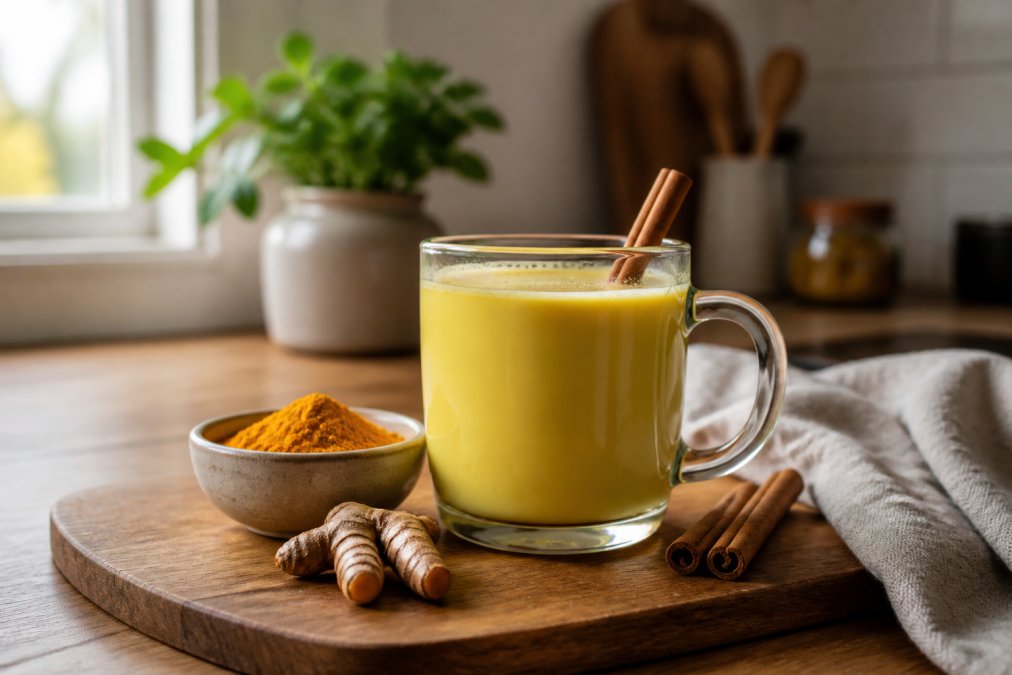
Warm milk with grated ginger, turmeric and a pinch of black pepper is the closest thing to a toddy that actively calms the gut: ginger supports gastric emptying, turmeric brings anti-inflammatory curcumin, and black pepper improves absorption.
Pros: soothing, anti-inflammatory, caffeine-free. Cons: full-fat dairy can feel heavy; use oat or almond milk if dairy slows you down.
2. Chamomile and Honey Infusion
Steep two chamomile teabags in hot water for five minutes, cool slightly, then stir in a teaspoon of honey. Chamomile calms, and honey coats the throat without the alcohol sting.
Pros: caffeine-free, gentle, easy to make. Cons: honey still counts as sugar, so keep it to one teaspoon.
3. Low-Acid Cold Brew with Warming Spices
Cold brew made with low-acid beans, gently warmed and finished with cinnamon, gives you the coffee ritual without the burn. Brew & Glow's Decaf Diva is roasted for 70% less acidity.

Pros: familiar coffee taste, gentler on the stomach, works hot or iced. Cons: still coffee, so keep it to one or two cups.
4. Peppermint and Fennel Herbal Decoction
A decoction of peppermint leaf and crushed fennel seed relaxes the gut and eases gas: simmer the fennel ten minutes, then steep the peppermint for three.
Pros: targets bloating directly, caffeine-free. Cons: peppermint can relax the oesophageal valve, so skip it if you have reflux rather than bloating.
5. Cinnamon and Clove Rooibos Tea
Rooibos is naturally caffeine-free and low in tannins. Add a cinnamon stick and one clove while it steeps for a warming, slightly sweet cup with no acidity.
Pros: caffeine-free, antioxidant-rich, naturally sweet. Cons: clove overwhelms quickly; one per cup is plenty.
6. Marshmallow Root and Slippery Elm Brew
Marshmallow root and slippery elm release mucilage that coats the throat and stomach lining. Steep in cool water for several hours, then warm gently.
Pros: excellent for a raw throat, soothing on the mucosal lining. Cons: take at least two hours apart from any medication, as it can slow absorption.
7. Warm Lemon and Manuka Honey Water
The gentlest option: warm, not boiling, water with a small squeeze of lemon and a teaspoon of manuka honey. It suits a stomach that cannot handle anything richer.
Pros: simple, low cost, easy on an empty stomach. Cons: lemon is still acidic, so use a small amount.
Benefits of Low Acid Coffee for Reflux and Digestive Comfort
Low-acid coffee for reflux does not remove acid entirely, it reduces the two things that provoke symptoms: the acid load in the cup and the caffeine-driven relaxation of the oesophageal valve. Understanding both helps you choose a base that suits your gut rather than one carrying a gentler label.
What "low acid" actually means
Coffee contains a mix of acids, chlorogenic, citric, malic, acetic and others, and total titratable acidity varies with bean, roast and brew method. Three factors move the number:
- Bean type. Arabica beans are naturally lower in acidity than Robusta. Single-origin Arabica grown at high altitude tends to be lower again, because slower ripening produces fewer harsh acids.
- Roast level. Darker roasts are often perceived as less acidic because roasting degrades some of the chlorogenic acids, though the effect is smaller than marketing suggests.
- Brew method. Cold water extracts fewer of the acids that heat pulls out, which is why cold brew is consistently lower in titratable acidity than hot-brewed coffee. This is a genuine mechanism, not a claim.
Low-acid is not the same as decaffeinated
This is the distinction most guides blur. Low-acid coffee reduces the acid load but keeps the caffeine, which still relaxes the lower oesophageal sphincter and stimulates gastric acid secretion. If your reflux is valve-driven rather than acid-driven, decaffeinated low-acid beans are the better choice. Swiss water decaffeination uses water and carbon filtration rather than chemical solvents, which suits anyone minimising their digestive load.
How to read a low-acid claim
"Low acid" is not a regulated term, so the label alone tells you little. Signals of a genuinely gentler bean:
- A stated bean type (Arabica, single origin) rather than a generic blend.
- A stated decaffeination method (Swiss water, CO₂) rather than "naturally decaffeinated".
- A roast profile described as medium or dark rather than very light.
- A brew recommendation that includes cold brew, which is the method that actually lowers acidity.
If a bag claims low acidity but lists Robusta, a light roast and no brew guidance, treat the claim with scepticism.
What low-acid coffee does and does not fix
It reduces the acid load reaching an irritated stomach lining, easing burning, sour taste and post-coffee heaviness. It does not fix reflux caused by a weak oesophageal valve, nor make coffee safe in unlimited quantities. One or two cups a day, brewed cold and served warm rather than scalding, is the pattern most sensitive drinkers settle on.
For anyone who has given up coffee because of reflux, this is the practical middle ground. Brew & Glow's Brew and Go Cold Brew Coffee Maker produces a litre of smooth, low-acid cold brew for around $2 a glass. You can read the Better Health Channel's guidance on reflux for the broader dietary picture.

How to Make Cold Brew at Home for a Gentler Morning Ritual
Learning how to make cold brew at home takes about five minutes of hands-on work and 12 to 18 hours of steeping. Coarse-ground beans go into cold filtered water at roughly 1:8, then rest in the fridge overnight.
- Weigh 100g coarse-ground low-acid beans
- Add 800ml cold filtered water
- Stir once to saturate the grounds
- Steep 12-18 hours in the fridge
- Filter through a fine mesh or paper filter
- Store in glass for up to five days
A double-filtered setup such as the Brew and Go keeps sediment out of the final pour, which matters if you want a clean cup without grit. Food Standards Australia New Zealand notes that brewed coffee should be refrigerated and consumed within a few days for safety.
Where to Buy Low Acidity Coffee Beans in Australia
You can buy low acidity coffee beans in Australia from specialty roasters, health food stores and online retailers, but the label matters more than the shelf. Look for low-acid, Swiss water decaffeinated, or single-origin Arabica grown at high altitude, which carries less acidity than Robusta.
Brew & Glow's Decaf Diva, at $17, is Swiss water decaffeinated and roasted in Australia for 70% less acidity, with compostable packaging. Pair it with the Brew & Go Bundle at $69 and you have both the maker and the beans in one order. Choice's coffee buying guide is a useful independent reference for comparing roast quality.
Gut-Health Contraindications and Temperature-Sensitive Digestion
Most toddy alternatives are marketed as universally soothing, but a sensitive stomach is not one condition. Reflux (GERD), IBS, functional dyspepsia and gastritis each react to different ingredients, and a drink that calms one can aggravate another, the part most guides skip.
Reflux and GERD: the ingredients that relax the valve
The lower oesophageal sphincter is the muscular valve that keeps stomach acid where it belongs. Certain compounds relax it, letting acid travel upward and producing the burning and sour taste of reflux.
- Peppermint is the classic example. It is excellent for gas and cramping lower down, but menthol relaxes smooth muscle throughout the gut, including the oesophageal valve. If your main symptom is burning rather than bloating, peppermint can make it worse.
- Caffeine, including in low-acid coffee, still relaxes the valve and stimulates acid production. Low-acid coffee reduces the acid load but does not remove the caffeine effect, which is why decaffeinated beans are the safer base for a reflux-prone drinker.
- Citrus, even a small squeeze of lemon, adds direct acid. A teaspoon in warm water is usually tolerated; a full lemon squeezed into a mug is not.
- High-fat dairy slows gastric emptying, which keeps acid in the stomach longer and increases the chance of reflux overnight. Oat and almond milk avoid this.
IBS and low FODMAP: sweeteners and botanicals to measure
FODMAPs are fermentable carbohydrates that draw water into the gut and feed gas-producing bacteria. For IBS, the sweetener is often the trigger rather than the spice.
- Honey is high in fructose and is a FODMAP sweetener. A teaspoon is generally tolerated; several tablespoons are not. Rice malt syrup and pure maple syrup are lower-FODMAP alternatives, though both are still sugar.
- Dried fruit (dates, figs, raisins) used to sweeten a toddy is concentrated FODMAP. Fresh ginger and turmeric are low-FODMAP in normal culinary amounts.
- Chamomile is low-FODMAP and generally well tolerated. Fennel seed is also low-FODMAP in tea-strength amounts, though large doses can have the opposite effect.
- Marshmallow root and slippery elm are not significant FODMAP sources, but see the medication note below.
Medication interactions worth knowing
Mucilage-rich herbs, marshmallow root, slippery elm, and to a lesser extent flaxseed, form a gel that coats the gut lining, which can also slow absorption of oral medications including thyroid medication, blood thinners, diabetes medication and some antibiotics. Separate these herbs from medication by at least two hours (some practitioners advise four), and check with your pharmacist before adding either herb.
Temperature: the quiet trigger
Temperature matters as much as ingredients. Very hot liquid irritates an already inflamed oesophageal or stomach lining, and repeatedly drinking very hot beverages is associated with oesophageal irritation. Very cold drinks can trigger cramping and rapid transit in a sensitive gut.
The practical target is warm, not scalding, roughly the temperature of a comfortably hot bath, around 50-60°C. If you can hold the mug against your wrist without flinching, it is in the right range. Let boiled water sit for two to three minutes before pouring over herbs, and never reheat a drink to boiling after it has cooled.
Ingredient sourcing: reducing the digestive load
Purity is part of digestive comfort. Spices and herbs can carry pesticide residues, moulds and fillers, and a sensitive gut reacts to those as readily as to the active compounds.
- Choose organic or pesticide-tested ginger, turmeric and cinnamon where possible. Cinnamon in particular is worth sourcing carefully: cassia cinnamon is high in coumarin, which is hard on the liver in large daily doses, while Ceylon cinnamon is much lower.
- Buy whole spices and grind or grate them fresh. Pre-ground powders lose volatile oils and are more prone to adulteration with fillers.
- For herbs like marshmallow root and slippery elm, look for suppliers who state the botanical name and origin, and avoid blends that list "proprietary herbal blend" without quantities.
- Store dried herbs and spices away from heat and light, and replace ground spices within about six months.
Conclusion: Finding Your Soothing Sip
The hard part is not finding a warm drink; it is finding one your gut accepts on a bad day. Start with the gentlest option, golden milk or rooibos, and add coffee back only once you know your baseline.
Brew & Glow offers the Brew and Go Cold Brew Coffee Maker, with its patented easy-pour lid and dual stainless steel filtration, plus Decaf Diva beans roasted for 70% less acidity. Shop the ritual and build a morning cup that soothes instead of stings.
Frequently Asked Questions
Is a traditional toddy acidic enough to trigger stomach discomfort?
Yes, a traditional toddy often combines alcohol, citrus juice, and sometimes black tea, all of which can raise stomach acidity. Alcohol relaxes the lower oesophageal sphincter, allowing acid to reflux more easily, while citrus adds direct acidity. For anyone with reflux or a sensitive stomach, this combination can cause burning, bloating, or nausea. Choosing a toddy alternative that skips alcohol and citrus is a practical way to enjoy a warm drink without the aftermath.
What are the best low-acid alternatives to a toddy for sensitive stomachs?
Ginger and turmeric golden milk, chamomile infusion, peppermint and fennel tea, and low-acid cold brew with warming spices are all gentler options. Each avoids alcohol and high-acid citrus while offering soothing properties. Ginger and fennel support gastrointestinal comfort, while chamomile and marshmallow root coat the throat. If you want a coffee-based option, cold brew made with low-acid beans delivers a smooth drink with up to 70% less acidity than standard hot coffee.
Can cold brew coffee be a stomach-friendly alternative to hot toddies?
Cold brew is brewed with cold water over 12 to 24 hours, which extracts fewer acids than hot brewing methods. When made with low-acid beans, the result is a smooth, non-alcoholic drink that is gentle on the digestive system. You can serve it warm with warming spices like cinnamon or cardamom for a toddy-like experience. The Brew and Go Cold Brew Coffee Maker makes this easy at home, producing a litre of café-quality cold brew for around $2 a glass.
How does low-acidity coffee compare to traditional brewing methods for digestion?
Traditional hot brewing extracts more chlorogenic and caffeic acids, which can irritate the stomach lining. Low-acid coffee beans are either naturally lower in these compounds or processed to reduce them further, and cold brew extraction adds another layer of gentleness. Many people with reflux find they can enjoy low-acid cold brew without the burning or discomfort they get from a standard flat white. The benefits of low acid coffee for reflux make it a worthwhile swap for sensitive stomachs.
Are there alcohol-free, low-acid warm drinks for digestive health?
Yes, several warm drinks support digestive health without alcohol or high acidity. Ginger tea with a touch of honey, turmeric golden milk with black pepper for bioavailability, and cinnamon rooibos are all caffeine-free and gentle. For a coffee-style option, warm low-acid cold brew with steamed milk and a pinch of cinnamon works well. These drinks provide symptom relief and mucosal comfort while fitting into a holistic wellness routine.


