
Table of Contents
- What Is Low Acidity Coffee and Why Does It Matter?
- The Real Benefits of Low Acid Coffee for Your Health
- What to Look for When You Buy Low Acidity Coffee Beans
- How to Brew Low Acid Coffee at Home
- Common Mistakes That Make Your Coffee More Acidic
- How Brew & Glow's Low Acidity Coffee Beans Are Different
- Conclusion
Last Updated: August 25, 2026
What Is Low Acidity Coffee and Why Does It Matter?
Low acidity coffee is coffee that contains reduced levels of organic acids, resulting in a pH closer to neutral and a noticeably smoother, gentler taste profile. For anyone who has ever winced at that sharp, sour bite after a morning cup, or spent the next hour dealing with stomach discomfort, low acidity coffee is not a marketing gimmick. It is a genuinely different product.
At Brew & Glow, we work with people who love coffee but have found that conventional brews work against their bodies. The difference between a standard espresso and a well-sourced, properly brewed low acid cup is not subtle. It changes how coffee feels, from the first sip to the rest of your morning.
Below, we break down the science, the sourcing, and the brewing methods that make low acidity coffee worth seeking out, and what to look for when you decide to buy low acidity coffee beans.
pH Levels, Titratable Acidity, and What the Numbers Mean
pH level is the most commonly cited measure of acidity, running from 0 (highly acidic) to 14 (highly alkaline), with 7 being neutral. Most brewed coffee sits somewhere between pH 4.5 and 6.0. Low acid coffee typically registers closer to the higher end of that range, approaching pH 6.0.
The more precise measure, however, is titratable acidity: the total concentration of acidic compounds present in the brew, regardless of how they register on the pH scale. A coffee can have a moderate pH but still contain high titratable acidity, meaning more acid overall. Both measures matter, and the best low acid coffees score well on both.
Chlorogenic Acid: The Compound Behind Stomach Discomfort
Chlorogenic acid is the primary organic acid in green coffee beans, and it is responsible for much of the stomach irritation that sensitive drinkers experience. During roasting, chlorogenic acid breaks down into quinic acid and caffeic acid. Lighter roasts retain more chlorogenic acid; darker roasts convert more of it.
This is why roast level is one of the most reliable predictors of acidity. Quinic acid, which forms during prolonged roasting and also accumulates in coffee that sits on a hotplate, is particularly harsh on the digestive system. Cold brew, which uses no heat, produces significantly less quinic acid than any hot-brewed method.
The Real Benefits of Low Acid Coffee for Your Health
The benefits of low acid coffee extend well beyond taste. For people with conditions affecting the digestive system, the difference can be significant enough to determine whether they drink coffee at all.

Gastroesophageal Reflux Disease and Sensitive Stomachs
Gastroesophageal reflux disease, commonly known as GERD, occurs when stomach acid flows back into the oesophagus, causing heartburn and discomfort. Coffee's organic acids can trigger or worsen this response, particularly in people with already sensitive stomachs. According to Better Health Channel, Victoria's government health information service, dietary choices, including acidic beverages, are a well-documented contributor to reflux symptoms.
Low acid coffee reduces the chemical load on the stomach lining. Less chlorogenic acid and quinic acid means less stimulation of gastric acid secretion. For people managing GERD, heartburn, or general gastrointestinal sensitivity, switching to low acid coffee is often one of the first practical changes their GP or dietitian recommends.
One of Brew & Glow's customers, Alex, put it plainly: "The low acidity really makes a difference. Finally a decaf I can enjoy."
Taste Benefits: Smooth Finish, Nutty Notes, and Chocolaty Undertones
Here is where the conversation shifts from health to pleasure. Low acid coffees tend to develop a fuller, rounder sensory profile. Without the sharp brightness that high-acid coffees carry, the palate picks up what was always there: nutty notes, chocolaty undertones, and a genuinely smooth finish that lingers rather than stings.
This is not a compromise. Many specialty coffee drinkers actively prefer the taste of low acid beans, particularly when brewed as cold brew, where the flavour compounds extract slowly and cleanly without heat-driven bitterness.
What to Look for When You Buy Low Acidity Coffee Beans
Most people searching to buy low acidity coffee beans focus on the wrong variable first. They reach for "dark roast" because they have heard it is less acidic, and stop there. Roast profile matters, but it is one factor among several.
Roast Profile: Why Dark Roast Reduces Acidity
Dark roast beans undergo longer exposure to heat, which degrades more of the chlorogenic acid present in the green bean. The result is a chemically less acidic cup. Medium roast sits in the middle: lower acid than light roast, but not as low as a full dark roast.
The trade-off is that very dark roasts can introduce bitterness from other degraded compounds. The sweet spot for most low acid drinkers is a medium-dark roast, which balances acidity reduction with flavour complexity.
Bean Origin and Processing Method
Single origin beans from certain growing regions naturally contain lower acid levels. Beans grown at lower altitudes, in mineral-rich volcanic soils, tend to produce less acidic coffee. Brazilian and Sumatran beans are frequently cited in specialty coffee circles for their naturally low acid profiles.
Processing method also plays a role. The natural process, where the coffee cherry dries around the bean, tends to produce lower acidity and heavier body compared to the washed process, which strips the fruit away and often yields a brighter, more acidic cup.
Arabica vs Robusta: Which Is Gentler?
Arabica beans are generally lower in chlorogenic acid than robusta beans, which makes them the default choice for low acid coffee. Robusta contains roughly twice the caffeine of arabica and a higher concentration of certain bitter compounds, which can amplify the perception of acidity even when the pH is similar.
For sensitive stomachs, high-quality arabica from a low-altitude origin, roasted to medium-dark, is the most reliable starting point.
Factor |
Lower Acidity |
Higher Acidity |
|---|---|---|
Roast level |
Dark / medium-dark |
Light / medium |
Bean species |
Arabica |
Robusta |
Processing method |
Natural process |
Washed process |
Growing altitude |
Low altitude |
High altitude |
Brew method |
Cold brew |
Espresso / filter |
How to Brew Low Acid Coffee at Home
Choosing the right beans is only half the equation. Brew method has a profound effect on the final acid content of your cup, sometimes more than roast level or origin.
Cold Brew vs Hot Brew: The Acidity Difference Explained
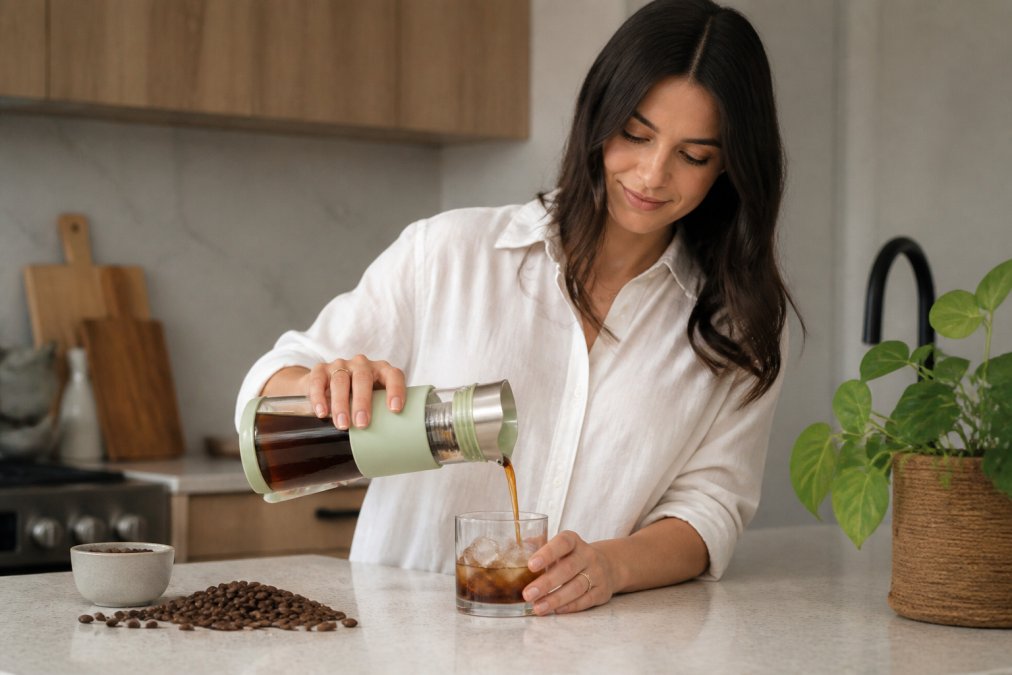
Cold brew is brewed without heat, using cold or room-temperature water over an extended steep time, typically 12 to 24 hours. This changes the chemistry of extraction fundamentally. Heat accelerates the extraction of organic acids, particularly quinic acid. Without heat, those acids extract more slowly and in lower concentrations.
The result: cold brew coffee is measurably less acidic than hot-brewed coffee made from the same beans. Research published through Healthline's nutritional science content notes that cold brew tends to produce a smoother, less acidic beverage compared to conventional hot brewing methods.
For anyone with a sensitive stomach, cold brew is not just a trend. It is the most reliable way to reduce acidity without compromising on caffeine content or flavour.
Water Chemistry, Grind Size, and Brewing Ratio
Water quality affects acidity more than most home brewers realise. Hard water, which contains higher levels of minerals like calcium and magnesium, has natural alkalinity that buffers the acids in coffee. Soft water, or water with low mineral content, allows those acids to express more fully.
If your tap water is very soft, filtered water with moderate mineral content will produce a noticeably smoother cup. This is one of the variables that specialty coffee professionals call water chemistry, and it is genuinely worth paying attention to.
Grind size and brewing ratio also matter. A coarser grind reduces the surface area available for extraction, which slows the release of acidic compounds. For cold brew specifically, a coarse grind is standard. A ratio of roughly 1 part coffee to 8 parts water is a common starting point, though this can be adjusted for concentrate.
Brewing Temperature and Extraction Time
For hot brewing, lower temperatures extract fewer acids. Most specialty coffee guides recommend water between 90°C and 96°C for filter coffee. Dropping below 90°C will reduce acid extraction but may also under-extract other desirable compounds, so there is a balance to find.
Extraction time works in tandem with temperature. Longer extraction at lower temperatures can produce a surprisingly balanced cup. Shorter extraction at high temperatures tends to pull acids quickly and leave the cup sharp. According to the Specialty Coffee Association's brewing guidelines, water temperature and contact time are among the most critical variables in controlling the final flavour and chemical profile of brewed coffee.
Common Mistakes That Make Your Coffee More Acidic
The biggest mistake is assuming that buying low acid beans is enough. Brewing method can undo every advantage the bean offers.
Here are the most common errors:
- Using water that is too hot. Brewing above 96°C extracts acids aggressively. A simple thermometer fixes this immediately.
- Grinding too fine for cold brew. Fine grinds in cold brew over-extract and pull more acidic compounds into the cup. Use a coarse setting.
- Steeping cold brew for too long. Beyond 24 hours, the flavour profile can turn harsh. Twelve to 18 hours is the practical sweet spot for most beans.
- Storing brewed coffee incorrectly. Oxidation increases perceived acidity. Store cold brew in a sealed glass container in the refrigerator and consume within four days.
- Ignoring water quality. Soft or heavily filtered water removes the mineral buffer that naturally softens acidity. Add a pinch of bicarbonate of soda to very soft water, or use filtered water with moderate mineral content.
A common mistake is also conflating "strong" with "acidic." A well-brewed, concentrated cold brew from quality low acid beans can be bold and full-bodied without the stomach-irritating sharpness of a poorly brewed filter coffee.
How Brew & Glow's Low Acidity Coffee Beans Are Different
Most coffee brands will tell you their beans are smooth. Few can explain precisely why.
Brew & Glow's low acidity coffee beans are responsibly sourced with a specific focus on minimising the organic acid load from the ground up. The beans are designed to be brewed as cold brew, which means they are selected and roasted to work with the cold extraction process rather than against it. The result is up to 70% less acidity compared to conventionally brewed coffee, which is a meaningful difference for anyone managing heartburn, GERD, or general stomach sensitivity.
For customers who want to eliminate caffeine without reintroducing acidity, Brew & Glow uses the Swiss water decaffeination process, which removes caffeine without chemical solvents and without compromising the low acid profile. This matters because many decaffeination methods alter the bean's chemistry in ways that can actually increase perceived acidity.
The patented cold brew pour mechanism on the Brew & Glow maker ensures a clean, sediment-free pour every time, which means the finished cup is as smooth in texture as it is in chemistry. The borosilicate glass and stainless steel construction means no plastic leaching into your brew, which is a genuine concern with lower-grade cold brew equipment.
This is not a lifestyle product dressed up as a health solution. It is a considered system, from bean selection through to the final pour, designed to make low acid coffee genuinely accessible at home.
For anyone ready to make the switch, the most important step is choosing beans that have been selected and roasted with acidity reduction as a deliberate goal, not an afterthought. The science of low acid coffee is well established. The challenge is finding a product that applies it consistently.
Frequently Asked Questions
Is cold brew coffee less acidic than hot coffee?
Yes. Cold brew is generally lower in acidity than hot-brewed coffee because the cold water extraction process produces fewer organic acids, including quinic acid and chlorogenic acid. The absence of heat means less chemical breakdown occurs during brewing. Studies suggest cold brew can have a pH closer to neutral compared to hot coffee. For anyone managing heartburn or gastroesophageal reflux disease, cold brew made with low acidity coffee beans is one of the gentlest options available.
What makes a coffee bean low acidity?
Several factors reduce acidity in coffee beans: a darker roast profile breaks down more chlorogenic acid during roasting; single origin beans from lower-altitude regions tend to have a naturally lower organic acid content; and the natural process method (where beans dry inside the fruit) can produce a smoother, less sharp sensory profile. Arabica beans are generally lower in acidity than robusta. When you buy low acidity coffee beans, look for these markers on the product description.
How do I reduce the acidity of my daily coffee at home?
Start with beans labelled as low acidity or dark roast. Brew with cold water using a cold brew method and allow a long extraction time of 12 to 24 hours. Use filtered water with some alkalinity, as highly acidic tap water raises the final pH of your cup. A coarser grind size and a balanced brewing ratio also help. Avoid over-extraction with hot water, which releases more quinic acid and makes the cup harsher on a sensitive stomach.
What is the best coffee for acid reflux?
Cold brew made from dark roast, low acidity arabica beans is widely regarded as the gentlest option for people with acid reflux or gastroesophageal reflux disease. The cold extraction process produces significantly less chlorogenic acid and other organic acids than hot brewing. If caffeine also triggers your symptoms, a Swiss water decaffeinated version of a low acidity bean removes most caffeine without chemical solvents, making it even easier on the digestive system.
This article was written using GrandRanker


